






What's Happening?
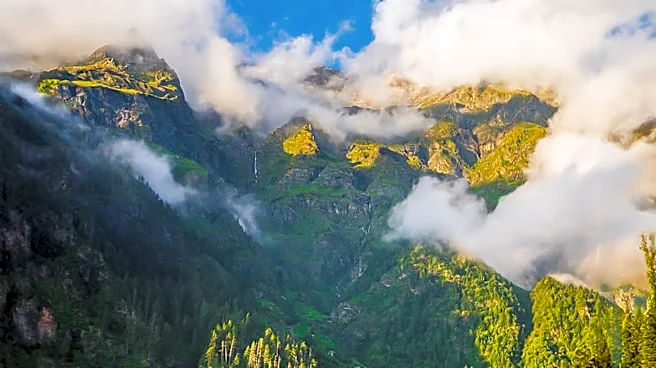
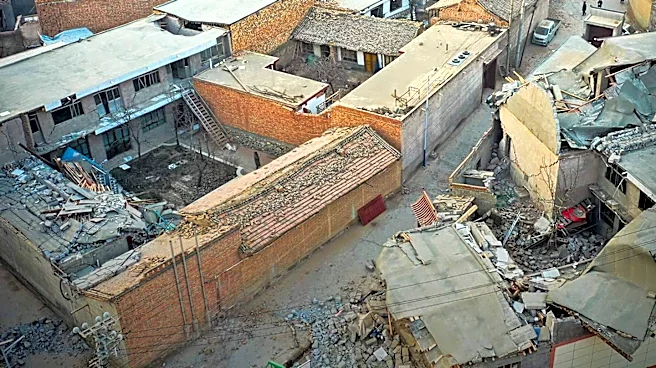
Recent cloudbursts in the Pir Panjal mountains of Indian-administered Kashmir have caused significant destruction, affecting remote communities like Murrah village. The intense rainfall led to landslides and flash floods, destroying homes and infrastructure,
and displacing hundreds of families. The Gujjar pastoralist community, heavily reliant on livestock and farming, has been particularly impacted. The erratic weather patterns are attributed to climate change, with scientists warning of increased frequency of such events in the western Himalayas. The International Centre for Integrated Mountain Development emphasizes the need for improved early warning systems and infrastructure designed for future weather conditions.
Why It's Important?
The devastation caused by the cloudbursts highlights the vulnerability of mountain communities to climate change. The increasing frequency of extreme weather events poses significant risks to livelihoods and infrastructure in the region. The situation underscores the urgent need for adaptive measures to mitigate the impacts of climate change, including better disaster preparedness and sustainable development practices. The challenges faced by these communities also reflect broader issues of environmental justice and the need for policies that support vulnerable populations in adapting to changing climatic conditions.
Beyond the Headlines
The impact of climate change on Kashmir's mountain communities extends beyond immediate physical damage. It threatens traditional ways of life and cultural heritage, as communities struggle to adapt to new environmental realities. The loss of ecological knowledge and ancestral livelihoods could have long-term implications for social cohesion and resilience. Addressing these challenges requires a holistic approach that integrates environmental, social, and economic considerations, ensuring that adaptation strategies are inclusive and equitable.