





What's Happening?
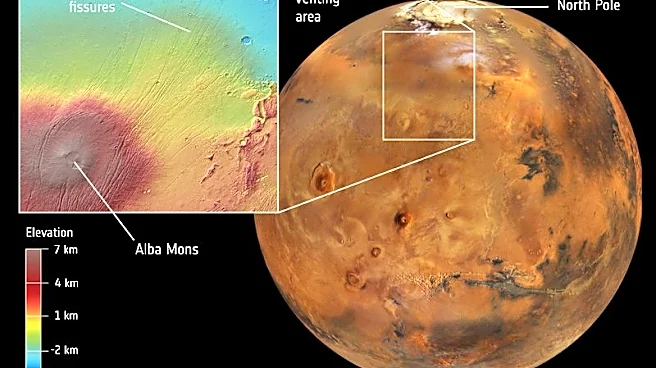
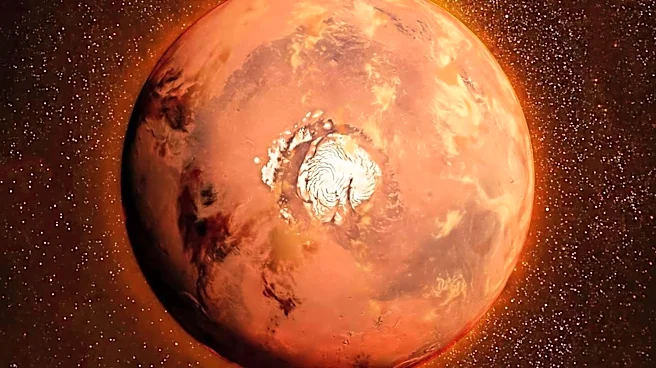
Europe's ExoMars Trace Gas Orbiter (TGO) has detected a possible signal of hydrogen chloride gas emanating from rifts in the Alba Mons region, Mars' largest volcano by surface area. This discovery suggests the presence of hot magma beneath the Martian
regolith. While previous seismic observations by NASA's InSight lander hinted at magma activity, the TGO's findings provide the strongest atmospheric evidence yet of gases being released by dormant volcanoes on Mars. The hydrogen chloride gas was initially observed seasonally but later found in unseasonal measurements in the northern hemisphere, indicating a localized 'puff of gas' rather than regular atmospheric chemistry. Scientists believe these emissions could point to an environment similar to Earth's hydrothermal vents, where life is thought to have originated.
Why It's Important?
The potential existence of hydrothermal vent-like environments on Mars carries significant implications for the search for extraterrestrial life. On Earth, such vents are known to support diverse ecosystems, suggesting that similar conditions on Mars could harbor microbial life. This discovery could reshape our understanding of Mars' geological activity and its capacity to sustain life, past or present. If confirmed, these findings would provide compelling targets for future Mars missions, focusing on subsurface exploration to directly investigate these potentially habitable zones. The presence of magma also indicates ongoing geological processes, which could contribute to a more dynamic and potentially life-supporting planet than previously thought.
What's Next?
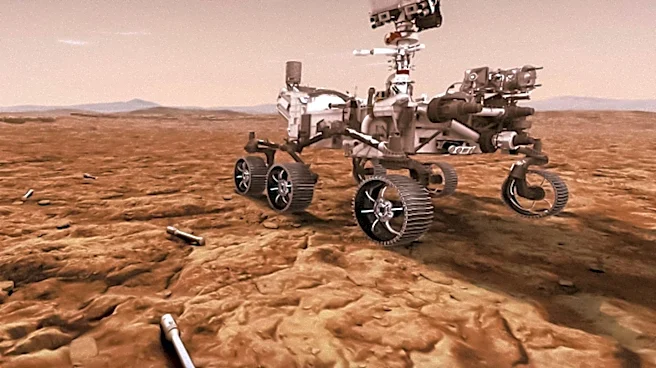
Further research is required to definitively confirm the emissions and their link to magmatic activity. Future Mars missions may prioritize investigating the Alba Mons region and other volcanic areas for direct evidence of hydrothermal systems. Scientists will continue to analyze data from the TGO and other orbiters, as well as potentially deploy new instruments capable of deeper subsurface probing. The long-term goal is to determine if conditions in these areas have been stable enough over millions of years to allow life to form and persist. This could involve missions designed to drill into the Martian crust or deploy specialized rovers to analyze gas compositions and geological features more closely.
Beyond the Headlines
The discovery of potential life-friendly environments on Mars raises profound philosophical and scientific questions about the prevalence of life in the universe. If life could arise independently on Mars, it would significantly increase the probability of life existing elsewhere. This finding also highlights the importance of interdisciplinary research, combining atmospheric observations, seismic data, and geological analysis to piece together a comprehensive picture of planetary habitability. The ethical considerations surrounding the discovery of Martian life, including planetary protection protocols and the implications for humanity's place in the cosmos, would become paramount. It could also spur advancements in astrobiology and space exploration technologies, driving innovation in areas like remote sensing and subsurface exploration.