



What's Happening?
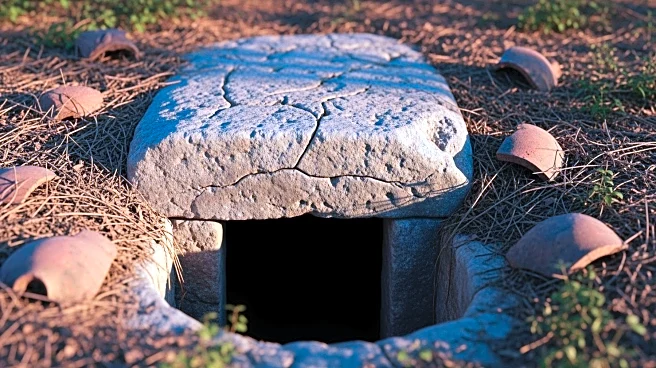
Four individuals were apprehended by the Israel Antiquities Authority (IAA) for illegally excavating a Roman-era burial cave near the Sea of Galilee. The suspects were caught in the act at the Nabi Shu’aib/Chitin archaeological site, causing significant
damage to the cave and its historical artifacts. The site is of considerable historical importance, linked to Jewish life and Talmudic sages, including Resh Lakish, a notable figure from the second generation of amoraim in the Land of Israel. The suspects claimed they were hunting partridges and picking mushrooms but admitted to using digging tools inside the cave. The IAA, in collaboration with the Lower Galilee Border Police, conducted the operation leading to their arrest. The suspects were released on personal bail, and the case will be reviewed for potential legal action.
Why It's Important?
The incident underscores the ongoing challenges in preserving archaeological sites, which are vital for understanding historical and cultural heritage. Damage to such sites not only destroys physical artifacts but also erases the historical narratives they represent. The IAA emphasizes the collective responsibility to protect these sites, as they are irreplaceable sources of knowledge. The Heritage Ministry has highlighted the impact of such actions on cultural memory and identity, stressing the need for continued efforts to safeguard these sites for future generations. This case highlights the tension between preserving cultural heritage and the illegal activities that threaten it.
What's Next?
The IAA will forward the case to its legal department to consider filing an indictment against the suspects. This process will involve assessing the extent of the damage and the legal implications of the suspects' actions. The outcome could set a precedent for how similar cases are handled in the future, potentially influencing policy and enforcement strategies. The Heritage Ministry and the IAA are likely to continue their efforts to enhance protection measures for archaeological sites, possibly increasing surveillance and public awareness campaigns to prevent future incidents.