
What's Happening?
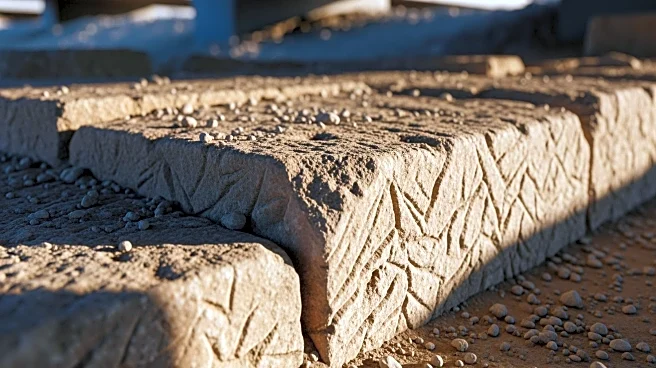
Archaeologists have uncovered a significant section of Jerusalem's ancient city wall beneath the Kishle prison complex. This 40-meter-long wall, dating back to the Hasmonean period of the Second Temple
era, is one of the most complete sections found to date. The wall, constructed from white limestone, was likely a formidable structure, possibly reaching 10 meters in height. The discovery was made during excavations led by Dr. Amit Re'em and Dr. Marion Zindel of the Israel Antiquities Authority, ahead of planned construction works. The wall's systematic dismantling raises questions about its destruction, with theories suggesting it may have been taken down by the Hasmoneans themselves or by King Herod as a political statement.
Why It's Important?
This archaeological find provides valuable insights into the history and architecture of ancient Jerusalem, particularly during the Hasmonean period. The discovery contributes to the understanding of Jerusalem's historical fortifications and the political dynamics of the era. It highlights the city's strategic importance and the complex interactions between different ruling powers. The excavation also underscores the ongoing efforts to preserve and study Jerusalem's rich archaeological heritage, which has implications for cultural tourism and historical scholarship.
Beyond the Headlines
The dismantling of the wall, possibly by its builders or by Herod, reflects the political maneuvering and power struggles of ancient times. This historical context offers a deeper understanding of how rulers used architecture to assert dominance and influence public perception. The find also raises questions about the preservation and interpretation of historical sites, as modern development projects intersect with archaeological research. The ongoing excavation efforts may continue to reveal more about Jerusalem's past, influencing both academic research and public interest in the city's history.