





What's Happening?
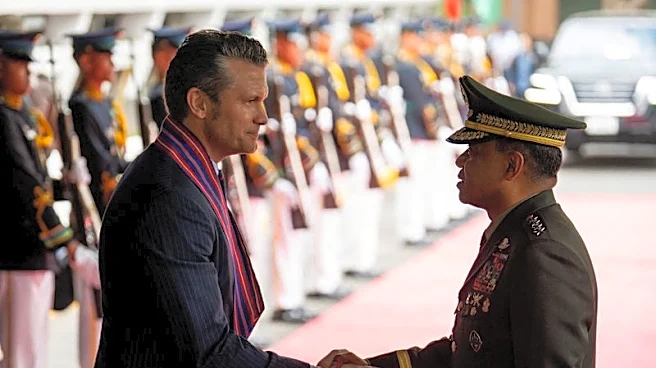
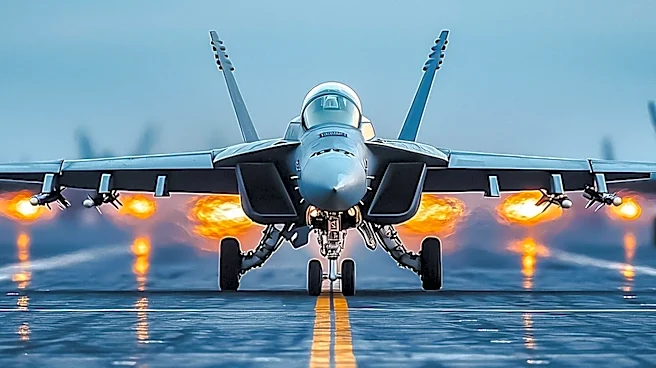
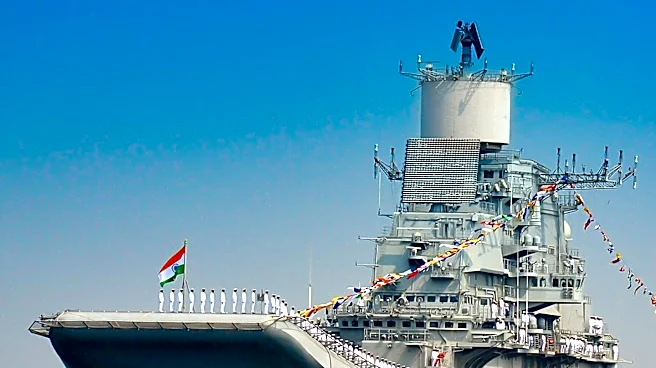
Defense Secretary Pete Hegseth has rejected reports of deteriorating conditions aboard the USS Abraham Lincoln, despite the aircraft carrier's deployment extending beyond 250 days. The Lincoln, carrying approximately 5,000 sailors, departed San Diego
on November 21, 2025, and has gone over 200 days without a port call. Senator Richard Blumenthal (D-Conn.) raised concerns in a letter to Hegseth and acting Navy Secretary Hung Cao, citing reports of supply shortages, contaminated water, plumbing failures, mail disruptions, and worsening mental health among the crew. The carrier's deployment was extended due to U.S. operations against Iran, with the ship being redirected to the Middle East in January after initially deploying to the Indo-Pacific. President Trump had previously described the carrier-led force as a 'massive Armada' during heightened tensions with Tehran. Hegseth, speaking to Newsmax, stated that accounts of poor conditions were 'completely misrepresented' and affirmed that the Navy ensures every ship and crew has necessary provisions.
Why It's Important?
The extended deployment of the USS Abraham Lincoln and the conflicting reports regarding crew conditions highlight significant challenges for U.S. military readiness and personnel welfare. Long deployments, particularly in high-tension regions, can strain resources, impact equipment maintenance, and severely affect the mental and physical health of service members. Senator Blumenthal's concerns underscore a broader issue of whether such prolonged deployments are becoming the norm rather than an exception, potentially leading to a decline in morale and an increase in operational risks. The Defense Secretary's dismissal of these reports, while emphasizing support for the troops, creates a narrative conflict that could impact public trust and congressional oversight. The situation also reflects the ongoing demands placed on the U.S. Navy by global geopolitical events, particularly in the Middle East, and the financial and human costs associated with maintaining a strong military presence abroad. The eventual replacement of the Lincoln by the USS George Washington indicates the continuous operational cycle and the need for sustained resources to manage these deployments.
What's Next?
The USS George Washington is expected to replace the USS Abraham Lincoln in the region, a move described as pre-planned. This rotation aims to alleviate the strain on the Lincoln's crew and resources. However, the underlying issues of extended deployments and their impact on sailor welfare are likely to remain a subject of congressional scrutiny. Senator Blumenthal's call for addressing reports of poor conditions suggests that further investigations or policy reviews may be initiated to ensure adequate support for deployed personnel. The Navy's response to concerns about suicidal ideation and suicide attempts will be critical in demonstrating its commitment to mental health. Future discussions will likely focus on balancing operational demands with the well-being of service members, potentially leading to adjustments in deployment schedules, resource allocation, and support services for military families. The ongoing U.S. operations against Iran will continue to influence naval deployments and the overall readiness of the fleet.
Beyond the Headlines
The situation aboard the USS Abraham Lincoln touches upon deeper societal and ethical considerations regarding the human cost of military operations. The 'invisible' burden on service members and their families during prolonged deployments often goes unnoticed by the general public, yet it has profound long-term effects on mental health, family stability, and reintegration into civilian life. The debate over 'misrepresented' conditions versus genuine concerns highlights the challenge of transparency and accountability within large military organizations. Furthermore, the reliance on aircraft carriers as symbols of U.S. power projection in volatile regions raises questions about the sustainability of such a strategy in an era of evolving threats and budget constraints. The incident could prompt a re-evaluation of how the U.S. military supports its personnel during extended missions, potentially leading to reforms in healthcare, family support, and deployment policies. It also underscores the psychological toll of continuous engagement in global conflicts, reminding the nation of the sacrifices made by its armed forces.