




What's Happening?
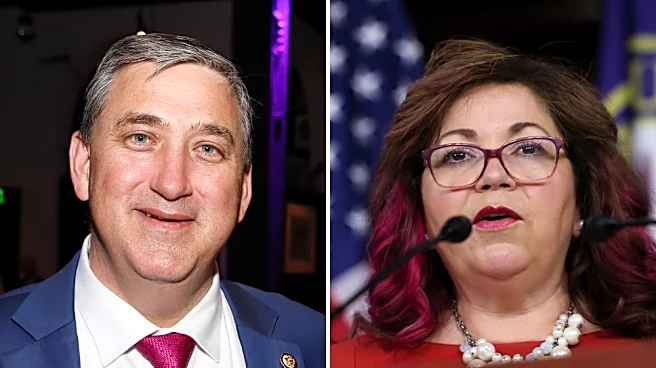
U.S. Representative Salud Carbajal, alongside Senators Sheldon Whitehouse, Alex Padilla, and Adam Schiff, and 14 other colleagues, have filed an amicus brief challenging the Trump Administration's use of the Defense Production Act (DPA) to facilitate
the restart of the Sable Offshore oil pipeline system. The brief, filed in California v. Wright in the U.S. District Court for the Central District of California, argues that the Administration has failed to demonstrate a legitimate national defense need for Sable's crude oil. They contend that the DPA order does not meet the statutory requirements for invoking such extraordinary authority, especially since Sable produces crude oil, not finished fuels for military use, and no clear connection has been established between Sable's production and an unmet military fuel requirement. The pipeline has been out of service since the 2015 Refugio oil spill, and Sable Offshore acquired the Santa Ynez Unit from ExxonMobil in 2024. In March 2026, Energy Secretary Chris Wright invoked the DPA to order Sable to restore pipeline operations.
Why It's Important?
This legal challenge is significant because it questions the scope and appropriate application of the Defense Production Act, a critical tool intended for national security. Lawmakers argue that the Trump Administration is misusing this act to benefit the fossil fuel industry and political allies, rather than addressing genuine national defense needs. This could set a precedent for how future administrations interpret and apply emergency powers, potentially blurring the lines between national security and economic policy. The restart of the Sable pipeline, which was previously involved in a major oil spill, raises environmental concerns for California's coastal communities and could impact public health and the local economy. The outcome of this case will determine whether the Administration's actions are deemed a legitimate exercise of executive power or an overreach that prioritizes corporate interests over environmental protection and statutory requirements.
What's Next?
The U.S. District Court for the Central District of California will now consider the arguments presented in the amicus brief as part of the California v. Wright case. The court's decision will determine the legality of the Trump Administration's DPA order regarding the Sable pipeline. Should the court rule against the Administration, it could halt the pipeline's restart and potentially lead to further legal challenges or policy adjustments regarding the use of the DPA. Conversely, a ruling in favor of the Administration would allow the pipeline restart to proceed, likely drawing strong reactions from environmental groups and California lawmakers. This case may also influence future legislative efforts to clarify or restrict the use of the DPA, particularly concerning its application to non-military industrial activities. Stakeholders, including environmental organizations, the fossil fuel industry, and coastal communities, will closely monitor the court's proceedings and potential appeals.
Beyond the Headlines
This case delves into the deeper implications of executive power and its potential for abuse, particularly when national security claims intersect with economic and environmental policies. The lawmakers' challenge highlights a broader concern about the influence of special interests, specifically the fossil fuel industry, on governmental decisions. It raises questions about transparency and accountability in the invocation of emergency powers like the DPA. Furthermore, the situation underscores the ongoing tension between energy development and environmental protection, especially in ecologically sensitive areas like the California coast. The legal battle could contribute to a re-evaluation of the balance between economic development, national security, and environmental stewardship, potentially leading to long-term shifts in how such conflicts are resolved at the federal level. The outcome could also impact public trust in government institutions and their ability to act impartially.