


What's Happening?
Medicare has successfully negotiated lower prices for the first 10 Part D prescription drugs, with these new Maximum Fair Prices (MFPs) taking effect on January 1, 2026. These negotiated prices are reported to be 38% to 79% below their 2023 list prices.
This initiative is part of Medicare's Drug Price Negotiation Program, which aims to reduce drug costs for beneficiaries. Following the initial set of Part D drugs, another 15 Part D drugs are scheduled for negotiation in 2027. By 2028, the program will expand to include 15 drugs across both Part B and Part D, marking the first inclusion of Part B drugs in the negotiation process. This program targets high-expenditure drugs that lack generic or biosimilar competition, as outlined in the Inflation Reduction Act.
Why It's Important?
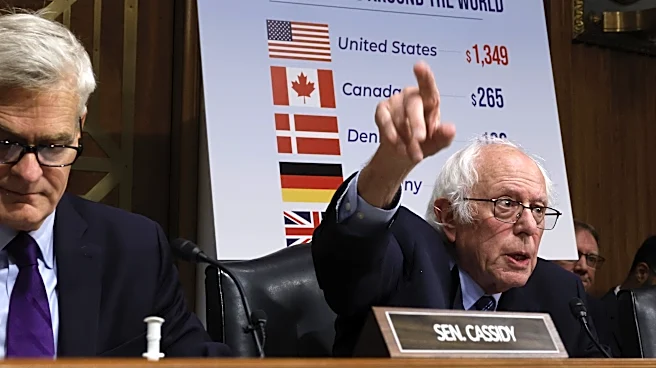
The implementation of Medicare's drug price negotiation program is a significant development for millions of Americans, particularly those relying on Medicare for their prescription drug needs. The substantial reduction in prices for the initial set of Part D drugs, ranging from 38% to 79% below 2023 list prices, indicates a potential for considerable savings for beneficiaries. This could alleviate financial burdens for individuals, especially those on expensive brand-name medications. The expansion of negotiations to Part B drugs in 2028 further broadens the scope of potential savings, impacting a wider range of treatments. This move also sets a precedent for government intervention in drug pricing, potentially influencing future healthcare policy and the pharmaceutical industry's pricing strategies. For pharmaceutical manufacturers, this program introduces a new dynamic, requiring them to engage in price negotiations with Medicare, which could affect their revenue models and research and development investments.
What's Next?
The Medicare Drug Price Negotiation program is set to continue its phased implementation. In 2027, an additional 15 Part D drugs will undergo price negotiation, building on the initial set that took effect in January 2026. The program will further expand in 2028 to include 15 drugs from both Part B and Part D, marking the first time Part B drugs will be subject to negotiated prices. Beneficiaries should monitor their Part D plans during open enrollment periods, as the availability of these negotiated prices may influence plan choices and out-of-pocket costs. The Centers for Medicare & Medicaid Services (CMS) will continue to publish updates on selected drugs and their negotiated prices. The ongoing success and impact of these negotiations could also fuel discussions about extending similar frameworks to private insurance, potentially broadening the reach of negotiated-price savings beyond Medicare beneficiaries.
Beyond the Headlines
The Medicare Drug Price Negotiation program represents a fundamental shift in how drug prices are determined in the U.S., moving away from a purely market-driven approach for certain high-cost medications. This initiative raises broader questions about the balance between pharmaceutical innovation and drug affordability. While lower prices benefit consumers and the healthcare system, some in the pharmaceutical industry argue that it could disincentivize research and development for new drugs. The program's long-term effects on the pharmaceutical landscape, including investment in novel therapies and the availability of new drugs, will be closely watched. Furthermore, the complexity of drug pricing, involving various benchmarks like Wholesale Acquisition Cost (WAC), Average Sales Price (ASP), and Average Manufacturer Price (AMP), highlights the intricate nature of the pharmaceutical supply chain and the challenges in achieving transparent and equitable pricing.