


What's Happening?
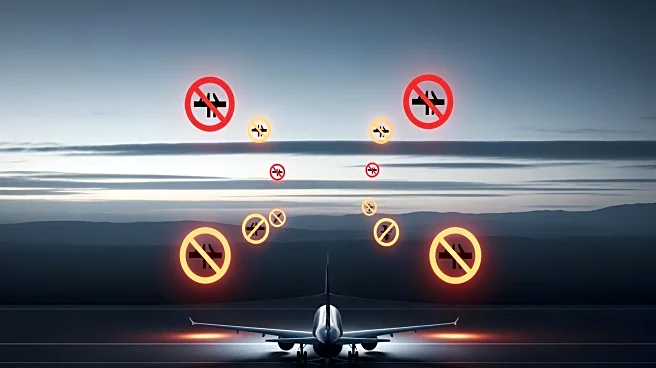
The ongoing conflict involving Iran has led to significant disruptions in air travel across the Middle East, affecting thousands of travelers worldwide. Major airlines have canceled flights to and from key cities in the region, including Dubai, Abu Dhabi,
and Doha, due to airspace closures. The U.S. State Department has issued a security alert advising American citizens to exercise caution and enroll in the Smart Traveler Enrollment Program for emergency contact. Other countries, including Canada and the UK, have also advised their citizens to avoid travel to the region.
Why It's Important?
The airspace closures in the Middle East have far-reaching implications for global travel and commerce. The region is a major hub for international flights, and disruptions can lead to significant economic losses for airlines and related industries. The situation also highlights the vulnerability of global travel networks to geopolitical conflicts. For travelers, the closures mean potential delays, cancellations, and increased travel costs. Governments and airlines must navigate the challenges of ensuring passenger safety while maintaining operational viability.
What's Next?
As the conflict continues, airlines may need to adjust their routes and schedules to avoid affected areas, potentially leading to longer travel times and increased operational costs. Governments may consider diplomatic efforts to de-escalate tensions and reopen airspace. Travelers are advised to stay informed about the situation and check with airlines for updates on flight status and rebooking options. The situation may also prompt discussions on improving crisis management and communication strategies in the aviation industry.