






What's Happening?
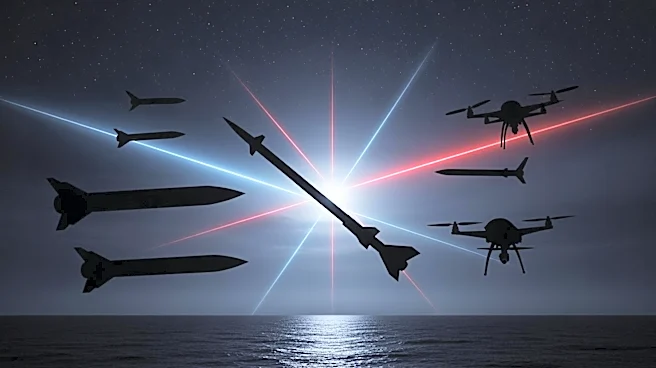
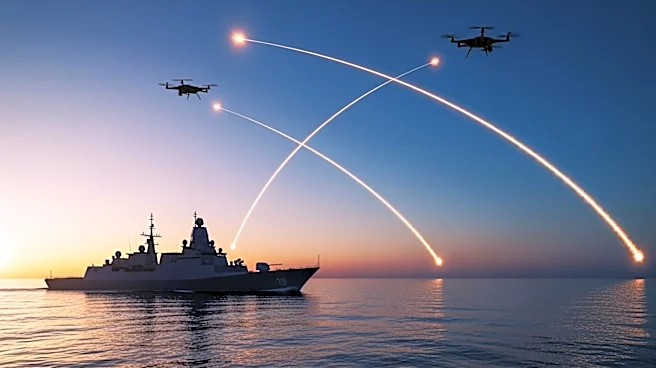
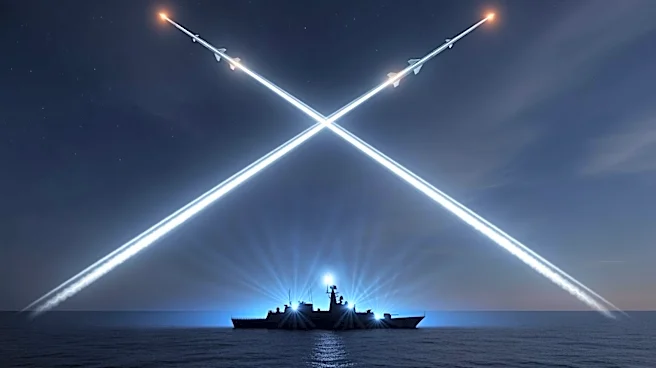
U.S. military forces successfully intercepted Iranian ballistic missiles and attack drones aimed at the Strait of Hormuz and nearby Gulf nations. According to U.S. Central Command (CENTCOM), Iran launched four one-way attack drones towards the strategic
waterway, which were shot down by U.S. forces to protect regional maritime traffic. Subsequently, Iran fired seven ballistic missiles targeting Kuwait and Bahrain, six of which were intercepted, while the seventh fell short of its target. In response, American forces targeted Iranian coastal surveillance radar sites in Goruk and on Qeshm Island to prevent further maritime threats. CENTCOM refuted Iranian state media claims of damage to the U.S. 5th Fleet headquarters in Bahrain, emphasizing their readiness to respond to Iranian aggression.
Why It's Important?
This incident underscores the ongoing tensions between the U.S. and Iran, particularly in the strategically vital Persian Gulf region. The interception of missiles and drones highlights the U.S. military's commitment to safeguarding international shipping lanes and deterring Iranian provocations. The actions taken by U.S. forces are part of a broader strategy to maintain stability in the region, which is crucial for global oil supply and economic stability. The situation also reflects the fragile nature of the ceasefire and the potential for escalation, impacting diplomatic relations and regional security dynamics.
What's Next?
The U.S. military's response to Iranian actions suggests a continued posture of vigilance and readiness to counter further threats. The situation may prompt diplomatic engagements to address the underlying tensions and prevent further escalation. Regional allies, such as Kuwait and Bahrain, may seek reassurances from the U.S. regarding their security. Additionally, the international community may call for renewed efforts to stabilize the region and uphold the ceasefire agreements.