



What's Happening?
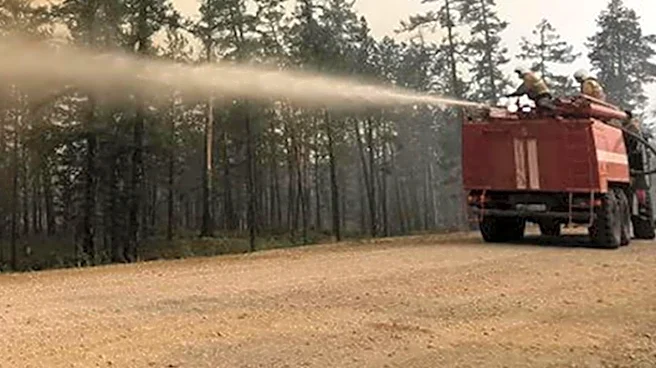
Arkansas is experiencing extreme drought conditions, leading to a heightened risk of wildfires across the state. The Arkansas Department of Agriculture reports that most of the state is under extreme drought, with at least 25 counties currently in the extreme wildfire risk category,
and more expected to be added. The U.S. Drought Monitor indicates that while the entire state is in moderate drought, half of it is classified under extreme or exceptional drought conditions. Despite these warnings, farmers in Northeast Arkansas have continued to clear row crop fields using fire in counties such as Craighead, Lawrence, Greene, Poinsett, Mississippi, Jackson, and Independence. Dry, hot weather, low humidity, and dry vegetation combined with winds are creating an environment where small fires can easily ignite, spread rapidly, and become difficult to control.
Why It's Important?
The severe drought and escalating wildfire risk in Arkansas pose significant threats to public safety, property, and natural resources. Uncontrolled wildfires can lead to widespread destruction of homes, infrastructure, and agricultural land, causing substantial economic losses. The continuation of agricultural burning despite the high risk further exacerbates the danger, potentially leading to larger, more destructive blazes that strain emergency services. This situation highlights the critical need for adherence to burn bans and increased caution in outdoor activities. The long-term implications include potential impacts on air quality, soil erosion, and ecosystem health, which can take years to recover. The state's agricultural sector, a cornerstone of its economy, is particularly vulnerable to both drought and fire damage.
What's Next?
The Arkansas Department of Agriculture is urging residents, landowners, and local fire agencies to take immediate preventative measures. These include reporting wildfires promptly to the Forestry Dispatch, checking for burn bans before any outdoor burning, and exercising extreme caution. Prescribed fires must be reported prior to ignition, and volunteer fire departments are advised to prepare for increased call volumes. Forest landowners are encouraged to plan for a brief prescribed burn season this fall, while homeowners and communities should familiarize themselves with the Firewise USA program for wildfire preparedness. With temperatures predicted to remain high and humidity low, and only a slight chance of rain, the wildfire risk is expected to persist and potentially worsen in the coming days.
Beyond the Headlines
The ongoing drought and wildfire crisis in Arkansas underscore broader environmental challenges facing the U.S., particularly the increasing frequency and intensity of extreme weather events. The conflict between traditional agricultural practices, such as field clearing by fire, and the heightened risks posed by climate conditions highlights a need for adaptive strategies in farming. This situation also brings to light the complex balance between economic activities and environmental conservation, especially in regions heavily reliant on agriculture. The long-term implications could include shifts in agricultural practices, increased investment in fire suppression and prevention technologies, and greater public education on climate resilience. It also raises questions about the effectiveness of current regulations and enforcement mechanisms during periods of extreme environmental vulnerability.