





What's Happening?
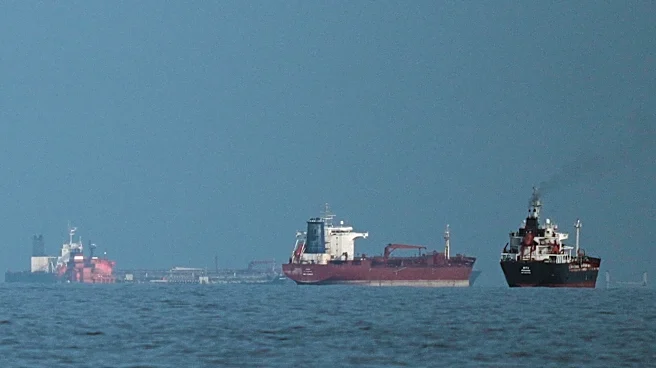
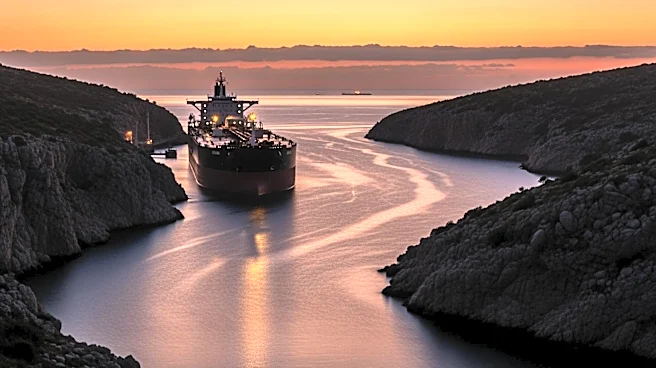
The ongoing conflict in the Middle East has led to a standoff between oil producers and tanker owners over the risks associated with crossing the Strait of Hormuz. Shipowners and charterers are struggling to agree on who should bear the risk, resulting
in few vessel bookings. The situation has become increasingly risky, with some ships navigating close to the coast of Iran or Oman or switching off satellite transponders to avoid detection. The disagreement has led to a significant drop in oil shipments through the Persian Gulf, with shipowners demanding high fees for potential cancellations and waiting times. The Baltic Exchange in London has advised brokers to include a risk premium in vessel-hire costs, which have surged to $475,000 a day.
Why It's Important?
The dispute over risk allocation in the Strait of Hormuz is critical as it affects the global oil supply chain. The inability to reach agreements on shipping terms has led to a bottleneck in oil transportation, exacerbating the global energy crisis. The increased costs and risks associated with shipping through Hormuz could lead to higher oil prices, impacting consumers and industries worldwide. The situation underscores the vulnerability of global energy markets to geopolitical tensions and highlights the need for alternative routes and strategies to ensure energy security.
What's Next?
Resolving the standoff between oil producers and tanker owners is essential for restoring normal shipping operations through the Strait of Hormuz. Diplomatic efforts may be required to ease tensions and facilitate agreements on risk-sharing. The ongoing conflict in the region may prompt countries to explore alternative energy sources and routes to reduce dependency on the Strait of Hormuz. Additionally, the situation may lead to increased investment in energy infrastructure and security measures to mitigate future disruptions.