
What's Happening?
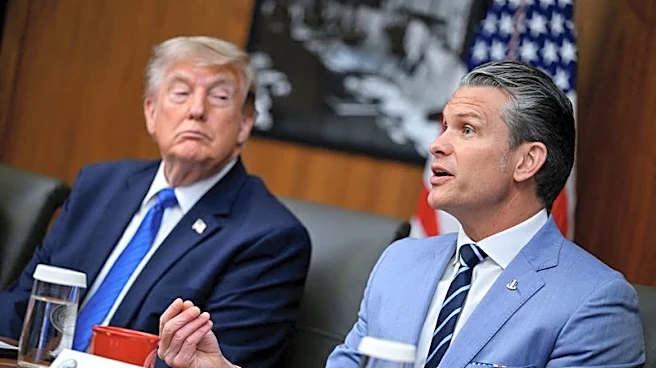
Over 70 Democratic House members, led by Representatives Kweisi Mfume (D-MD-07), Wesley Bell (D-MO-01), and Marilyn Strickland (D-WA-10), have sent a letter to Department of Defense Secretary Pete Hegseth
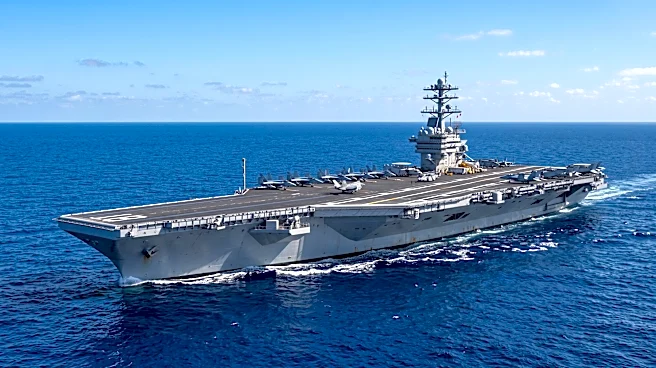
and Acting Navy Secretary Hung Cao, urging them to retain the name USS Doris Miller for the aircraft carrier CVN-81. The letter follows recent reports that the U.S. Navy is considering renaming the ship to honor President Trump. The lawmakers argue that renaming the ship after a sitting president would be unprecedented, break longstanding tradition, and diminish the recognition of Doris Miller, a World War II hero who displayed extraordinary bravery during the attack on Pearl Harbor. Congressman Dwight Evans (D-PA) is among the signatories of this letter.
Why It's Important?
The potential renaming of the USS Doris Miller has sparked significant controversy, touching upon issues of military tradition, historical recognition, and political influence. Doris Miller was a Mess Attendant Third Class who, during the attack on Pearl Harbor, took control of an anti-aircraft gun and assisted wounded sailors, becoming the first African American to be awarded the Navy Cross. Naming CVN-81 after him was a historic decision, marking the first aircraft carrier named for an African American and an enlisted sailor. Renaming it would be seen as a significant step backward in honoring his courage and the contributions of African Americans in the military. The opposition from over 70 members of Congress underscores the strong sentiment against altering such a significant tribute, emphasizing the importance of preserving military honors and traditions free from political expediency.
What's Next?
The letter from the congressional members puts direct pressure on Secretary Hegseth and Acting Secretary Cao to reject the proposed renaming of the USS Doris Miller. The Department of Defense and the Navy will need to respond to this significant congressional opposition. The decision will likely involve weighing the historical precedent of naming warships, the symbolic importance of Doris Miller's legacy, and the political implications of honoring a sitting president in this manner. Further public debate and advocacy from various groups, including veterans' organizations and civil rights advocates, are also likely. The outcome will set a precedent for how future military honors are handled and whether established traditions will be maintained or altered under political pressure.
Beyond the Headlines
This controversy extends beyond a simple ship-naming dispute; it delves into deeper questions about how national heroes are honored, the role of tradition in military institutions, and the potential for political figures to influence such decisions. The push to rename the USS Doris Miller highlights a tension between honoring historical figures who represent courage and sacrifice, particularly those from underrepresented communities, and the desire to commemorate contemporary political leaders. It also raises ethical considerations about the appropriate use of military honors and the potential for such actions to be perceived as self-serving or divisive. The debate underscores the importance of preserving historical narratives and ensuring that military recognition remains a testament to service and valor, rather than a tool for political aggrandizement.