




What's Happening?
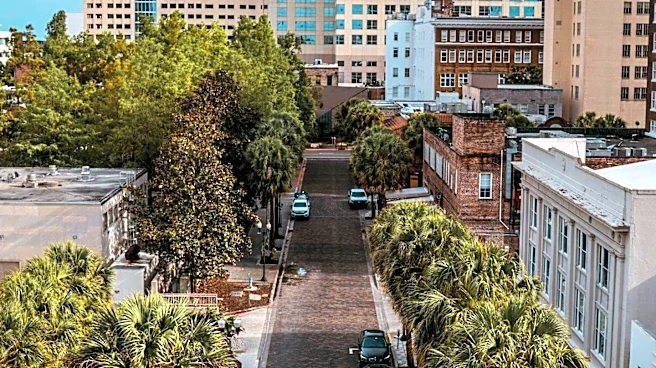
Newtown, a historically Black community in Sarasota, Florida, is undergoing revitalization efforts aimed at improving its infrastructure and economic opportunities. Community leaders and residents are actively involved in shaping these plans, which include
an overhaul of Dr. Martin Luther King Jr. Way, the commercial main street, with new shops, restaurants, and cultural hubs. The goal is to attract investment and create wealth within the community, addressing decades of underinvestment and neglect. However, there is significant concern among long-term residents about potential gentrification and displacement. Figures like Jetson Grimes, a local business owner, emphasize the need for investment that protects existing community members rather than pushing them out. Sarasota City Commissioner Kyle Battie highlights the neighborhood's 2024 listing in the National Register of Historic Places as a crucial factor in preventing gentrification, as it imposes regulatory hurdles for developers. Residents are seeking transparency and community input to ensure that the revitalization benefits those who have sustained Newtown through challenging times.
Why It's Important?
The revitalization efforts in Newtown are important as they represent a critical juncture for a historically marginalized community. The success or failure of these plans to balance economic growth with community preservation could set a precedent for similar neighborhoods across the U.S. If successful, Newtown could demonstrate a model for equitable development that empowers existing residents and businesses, fostering wealth creation within the community. Conversely, if gentrification occurs, it could lead to the displacement of long-term residents and the erosion of the neighborhood's unique cultural identity, as seen in other historically Black communities like Sarasota's Rosemary District (formerly Overtown). The outcome will impact the socio-economic fabric of Newtown, influencing property ownership, business sustainability, and the availability of affordable goods and services for its current population. The median household income in Newtown, significantly lower than Sarasota's citywide median, underscores the urgency of ensuring that development benefits the current residents.
What's Next?
Community meetings are ongoing to gather input and refine the revitalization plans for Newtown. Key next steps involve connecting local small businesses with development organizations for technical assistance and establishing a network to promote new events. Residents are advocating for government earmarks to fund infrastructure improvements, such as drainage, sidewalk upgrades, and updated crosswalks and lights. There is a strong push for transparency, with calls for a public dashboard to track the benefits of Community Redevelopment Agency (CRA) spending, a resident oversight body with genuine authority, and dedicated funding for Black-owned businesses along the MLK corridor. The effectiveness of the National Register of Historic Places listing in deterring undesirable development will be closely watched. The community's focus is on ensuring that the current plans are executed in a way that sustains the community for future generations, unlike past revitalization talks that did not yield lasting, community-authored change.
Beyond the Headlines
The situation in Newtown reflects a broader national challenge faced by many historically underserved communities: how to achieve economic revitalization without succumbing to gentrification. This case highlights the ethical imperative of inclusive development, where the voices and needs of long-term residents are prioritized. The emphasis on community-led initiatives and the strategic use of historic preservation status to create development hurdles demonstrate innovative approaches to combat displacement. The struggle in Newtown also underscores the long-term impacts of systemic underinvestment and the resilience of communities in maintaining their identity. The outcome will not only shape the physical landscape of Newtown but also its cultural heritage and social cohesion, serving as a test case for equitable urban planning and community empowerment in the face of economic pressures.