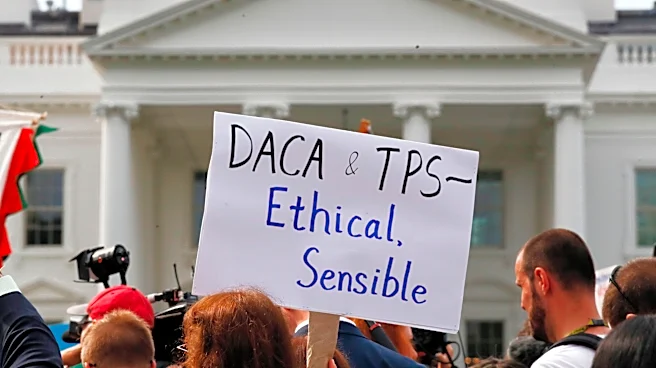

What's Happening?
The U.S. Supreme Court is currently deliberating on whether the Trump administration can terminate the Temporary Protected Status (TPS) for immigrants from Haiti and Syria. This program has historically
allowed individuals from countries experiencing war, political instability, or natural disasters to live and work in the U.S. without fear of deportation. The Trump administration argues that the judiciary should not have the authority to review its decisions regarding TPS, claiming these are matters of foreign policy and national security. The case has reached the Supreme Court following lower court rulings that blocked the administration's attempts to end TPS for these groups. The administration's stance is that the Department of Homeland Security has the discretion to terminate TPS without judicial interference.
Why It's Important?
The outcome of this case could have significant implications for nearly 1.3 million TPS holders in the U.S. If the Supreme Court sides with the Trump administration, it could pave the way for the termination of TPS for all designated countries, potentially leading to the deportation of hundreds of thousands of immigrants. This decision could also set a precedent regarding the extent of executive power in immigration matters, influencing future administrations' policies. The case highlights ongoing debates about the balance of power between the executive branch and the judiciary, as well as the role of humanitarian considerations in immigration policy.
What's Next?
A decision from the Supreme Court is expected by late June or early July. If the court rules in favor of the Trump administration, it is likely that efforts to end TPS for other countries will intensify. This could lead to increased legal challenges and further political debate over immigration policy. The decision will also be closely watched by immigrant advocacy groups and could influence legislative efforts to reform the TPS program.
Beyond the Headlines
The case also raises questions about the motivations behind the Trump administration's immigration policies, with some justices and critics suggesting that racial bias may have influenced decisions to end TPS for certain countries. The administration's actions have been compared to its travel ban on several Muslim-majority countries, which was upheld by the Supreme Court in 2018. The broader implications of this case could affect U.S. foreign relations and the country's reputation as a haven for those fleeing dangerous conditions.