



What's Happening?
Neera Tanden, president of the Center for American Progress, has been vocal in the ongoing debate within the Democratic Party regarding its approach to working-class voters. Tanden argues that working-class individuals tend to be more moderate than college-educated
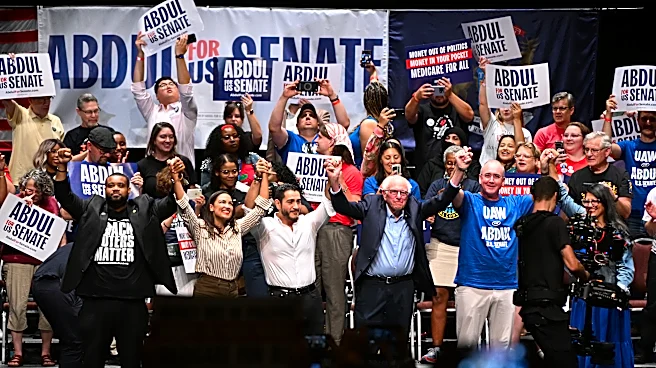
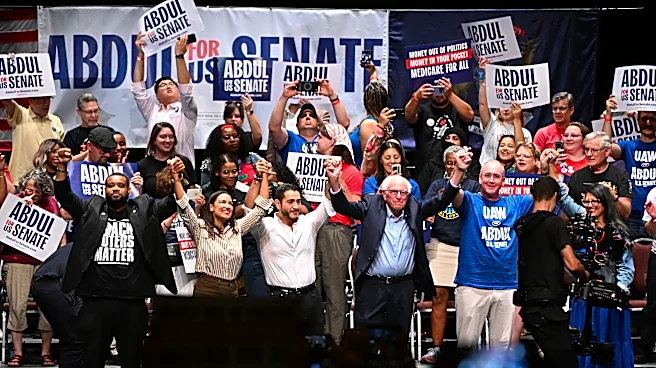
voters, challenging the progressive belief that they are inherently left-leaning. This discussion has gained traction following a poll showing Rep. Haley Stevens leading among non-college-educated voters in the Michigan Senate primary, while her progressive opponent, Abdul El-Sayed, was favored by college-educated voters. Tanden's comments highlight a broader concern that the party's progressive wing may be widening the class divide by supporting candidates who do not resonate with non-college-educated voters. This issue is particularly pressing as Democrats seek strategies to regain support from working-class voters, a demographic that has increasingly drifted away from the party.
Why It's Important?
The debate over the Democratic Party's strategy towards working-class voters is crucial as it could influence the party's ability to regain political power. The divide between moderate and progressive factions within the party reflects differing views on how to appeal to this demographic. If the party fails to address these internal conflicts, it risks alienating a significant portion of the electorate. The outcome of this debate could shape the party's platform and candidate selection in future elections, potentially impacting its success in winning back working-class voters who have shifted towards the Republican Party in recent years. The discussion also underscores the broader challenge of balancing progressive ideals with the need to appeal to a diverse voter base.
What's Next?
As the Democratic Party continues to grapple with its strategy towards working-class voters, it faces the challenge of reconciling the differing views within its ranks. The party will need to evaluate the effectiveness of its current approach and consider adjustments to better align with the preferences of non-college-educated voters. This may involve rethinking candidate selection and messaging to ensure broader appeal. The outcome of upcoming primaries and elections will provide further insight into the party's ability to navigate these challenges and regain support from working-class voters. Additionally, the party must address the potential consequences of failing to bridge the divide between its moderate and progressive factions.