






What's Happening?
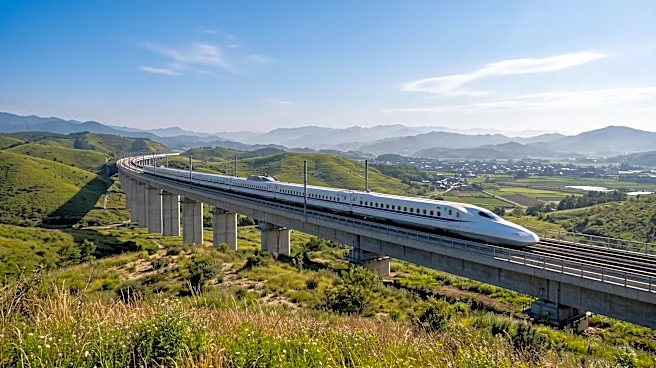
On the first day of China's National Day holiday, October 1st, the country's railway industry transported an unprecedented 25.204 million passengers, marking the highest number ever recorded in a single day. This figure indicates a significant surge in travel
demand during the holiday period. For October 2nd, China's railway industry anticipated serving approximately 20.39 million passengers and planned to add 1,462 extra trains to accommodate the continued high demand. Advance ticket sales data revealed that major cities like Beijing, Guangzhou, and Shanghai were among the top departure points on October 2nd, while also being popular destinations for returning passengers. High-traffic routes included Guangzhou-Nanning, Xi'an-Chengdu, and routes connecting Beijing to Shenyang, Zhengzhou, and Qingdao.
Why It's Important?
This record-breaking passenger volume highlights the immense scale of domestic travel and economic activity within China during national holidays. The railway system's capacity to manage such a large influx of travelers demonstrates significant logistical and infrastructural capabilities. The surge in travel demand reflects strong consumer confidence and a robust domestic tourism sector, which are crucial indicators of economic health. The increased mobility of people across various regions also facilitates economic exchange and cultural interaction, contributing to regional development. The railway industry's proactive measures, such as adding extra trains and services, are essential for maintaining efficiency and passenger satisfaction during peak travel periods, preventing potential bottlenecks and disruptions.
What's Next?
In response to the sustained high travel demand, local railway companies are expected to continue maximizing their transport capacity and adding extra services on popular routes. Harbin Railway Group has already added 96 services, and Taiyuan Railway Group has added 66, including 16 high-speed night trains. Zhengzhou's railway sector added 142 services on high-demand routes. Additionally, railway stations like Kaifeng are collaborating with tourism agencies to offer discounts to passengers, integrating railway transportation with tourism activities. These efforts are likely to continue throughout the National Day holiday, ensuring smooth travel for millions and supporting the tourism industry. The experience gained from managing this record demand will inform future planning for similar peak travel seasons.
Beyond the Headlines
The massive movement of people during China's National Day holiday offers a unique insight into the country's social fabric and economic priorities. It underscores the importance of family reunions and domestic tourism as integral parts of Chinese culture. The efficiency and scale of the railway system also reflect China's broader investment in infrastructure and its ability to mobilize resources for large-scale operations. This phenomenon can also have environmental implications, with increased carbon emissions from transportation, prompting discussions on sustainable travel solutions. Furthermore, the integration of railway services with tourism packages indicates a strategic approach to boost local economies and enhance the overall travel experience, showcasing a coordinated effort between different sectors.