







What's Happening?
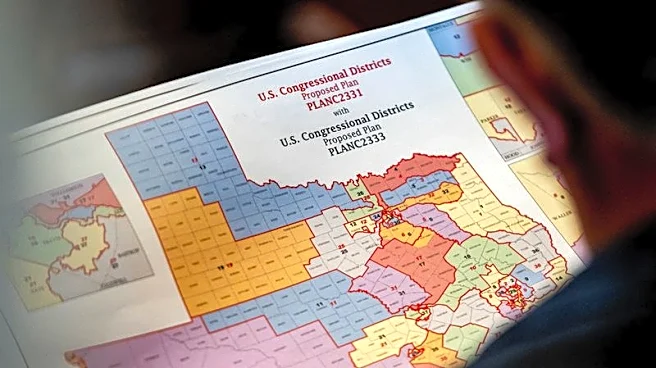
The South Carolina House of Representatives has passed a congressional redistricting plan that favors the Republican Party, despite objections from Democratic lawmakers. The plan, supported by President Trump, aims to reshape the state's only Democratic-held
U.S. House district to increase Republican chances of gaining an additional seat in the upcoming November midterm elections. The decision follows a 14-hour session where the bill was debated extensively. The proposal now moves to the state Senate, where some Republicans have expressed concerns about potential backlash. The plan includes delaying U.S. House primaries to August and discarding some absentee and overseas military votes already cast. This move is part of a broader national strategy by Republicans to maintain their slim majority in the House.
Why It's Important?
The redistricting plan in South Carolina is significant as it reflects a larger national effort by the Republican Party to secure more seats in the U.S. House of Representatives. By potentially altering the political landscape in favor of Republicans, the plan could impact the balance of power in Congress. The decision also highlights ongoing debates over gerrymandering and its implications for minority representation, particularly following a recent Supreme Court ruling that weakened protections under the Voting Rights Act. The outcome of this redistricting could influence future legislative priorities and the political climate in South Carolina and beyond.
What's Next?
The redistricting plan will be reviewed by the South Carolina Senate, where its fate remains uncertain due to some Republican skepticism. If approved, the state will face logistical challenges, including organizing a special primary election and addressing potential legal challenges. The plan's implementation could lead to further political and legal battles, as Democrats and civil rights groups may contest the changes. Additionally, the NAACP has called for a boycott of athletic programs in states pursuing similar redistricting efforts, which could have cultural and economic repercussions.
Beyond the Headlines
The redistricting efforts in South Carolina and other states raise ethical questions about the manipulation of electoral boundaries for political gain. The potential disenfranchisement of minority voters and the undermining of democratic principles are central concerns. The situation underscores the ongoing struggle for fair representation and the role of the judiciary in shaping electoral policies. Long-term, these developments could influence public trust in the electoral process and the perceived legitimacy of elected officials.