







What's Happening?
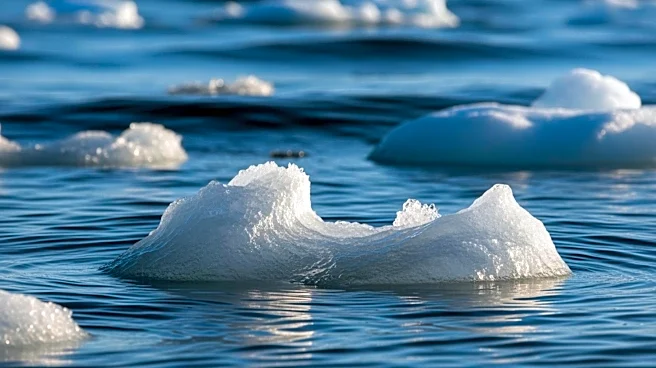
Scientists are raising alarms over the weakening of the Atlantic Meridional Overturning Circulation (AMOC), a crucial ocean current system that regulates global climate. This weakening is attributed to the influx of freshwater from melting Greenland ice,
which reduces the salinity and density of surface waters, hindering their ability to sink and sustain circulation. The phenomenon is marked by an unusually cold ocean area south of Greenland, known as the 'cold blob,' and is considered the weakest in at least 1,000 years.
Why It's Important?
The weakening of the AMOC poses significant risks to global climate stability. An abrupt collapse could lead to severe consequences, such as drastically colder winters in Europe, accelerated sea-level rise on the U.S. East Coast, and disruptions to monsoon systems in Africa. These changes could have profound impacts on agriculture, infrastructure, and ecosystems, affecting millions of people worldwide. The situation underscores the urgent need for international cooperation in addressing climate change and mitigating its effects.
What's Next?
As scientists continue to monitor the AMOC, there is a pressing need for comprehensive climate models to predict potential outcomes and inform policy decisions. Governments and international bodies may need to enhance their climate adaptation and mitigation strategies to prepare for possible disruptions. Public awareness and engagement in climate action could also play a crucial role in driving policy changes and fostering resilience against climate impacts.