


What's Happening?
Azerbaijan has facilitated the return of 87 displaced families to various villages within the Karabakh region, including Kyarkidzhakhan, Khojaly district, and Agdere district. This resettlement follows Azerbaijan's large-scale military operations in September
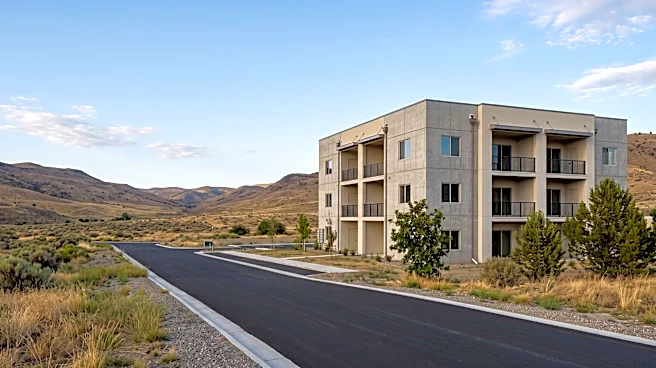
2023, which resulted in the country taking control of Nagorno-Karabakh. The military action led to a mass exodus of the Armenian population, with 100,632 displaced persons arriving in Armenia by October 7, 2023. By September 2024, only 14 Armenians reportedly remained in the region. The current resettlement efforts are part of Azerbaijan's 'Great Return' program, which aims to resettle 140,000 people in the territories of Karabakh by 2026. The families returning had previously resided temporarily in various parts of Azerbaijan, often in dormitories, sanatoriums, and administrative buildings. They are being provided with keys to apartments in the newly resettled areas.
Why It's Important?
The resettlement of Azerbaijani families in Karabakh marks a significant step in Azerbaijan's efforts to reassert control and normalize life in the territories it regained in 2023. This initiative is crucial for Azerbaijan's national narrative and its long-term strategy for the region, aiming to solidify its demographic and administrative presence. The 'Great Return' program, with its ambitious target of 140,000 resettled individuals by 2026, underscores the government's commitment to rebuilding and integrating these areas. However, the process is not without challenges; analysts like Toghrul Juvarly note that the resettlement pace is lagging behind the declared goals, with approximately 35,000 people returned to 45 settlements so far. The returnees themselves have reported ongoing issues with employment and infrastructure, despite acknowledging improvements in living conditions. This highlights the complex socio-economic challenges inherent in post-conflict reconstruction and resettlement, impacting both the returning population and the broader regional stability.
What's Next?
Azerbaijan is expected to continue its 'Great Return' program, aiming to accelerate the resettlement of displaced persons to meet its target of 140,000 by 2026. This will involve further investment in housing, infrastructure, and job creation in the Karabakh region. The government will likely focus on addressing the reported issues of employment and infrastructure to ensure sustainable resettlement and improve the living conditions for returning families. The international community will be observing these efforts closely, particularly concerning the rights and welfare of the returning population and the broader implications for regional stability. The long-term success of the resettlement program will depend on Azerbaijan's ability to provide comprehensive support and create viable economic opportunities for its citizens in Karabakh. Additionally, the unresolved issues of property rights in the territories that came under Azerbaijan's control will need to be addressed to ensure a fair and equitable process for all affected parties.
Beyond the Headlines
The resettlement of Azerbaijani families in Karabakh carries profound implications beyond immediate housing and infrastructure. It represents a demographic and cultural shift in a region that has been a flashpoint for decades. The near-complete exodus of the Armenian population and the subsequent return of Azerbaijanis fundamentally alter the ethnic composition and historical narrative of Nagorno-Karabakh. This demographic transformation could solidify Azerbaijan's claims to the territory and reshape future geopolitical discussions about the region. The 'Great Return' program, while framed as humanitarian, also serves a strategic purpose in consolidating national identity and territorial integrity. The challenges faced by returning families, such as employment and infrastructure, underscore the broader complexities of post-conflict recovery, where physical reconstruction must be accompanied by social and economic integration. This situation raises questions about the potential for reconciliation and coexistence in a region deeply scarred by conflict, and how international actors will engage with these evolving realities.