
What's Happening?
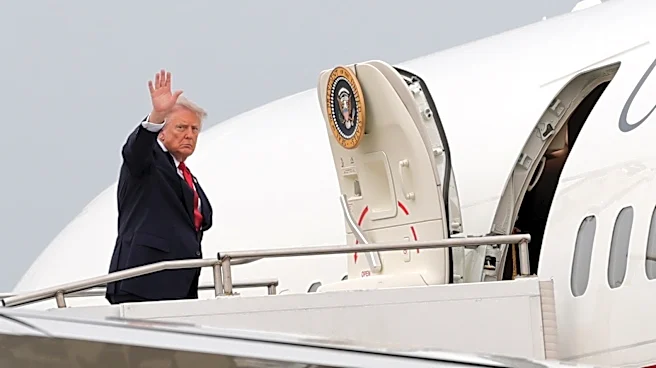
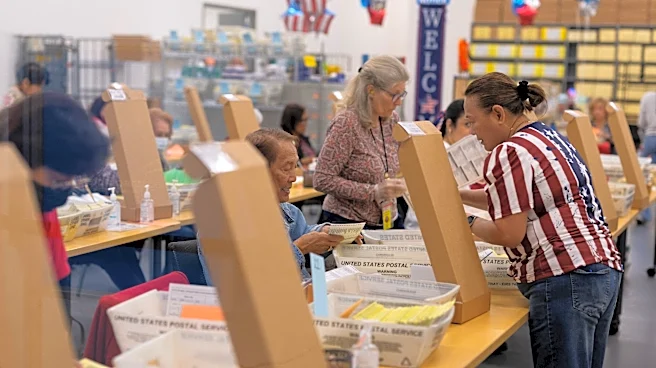
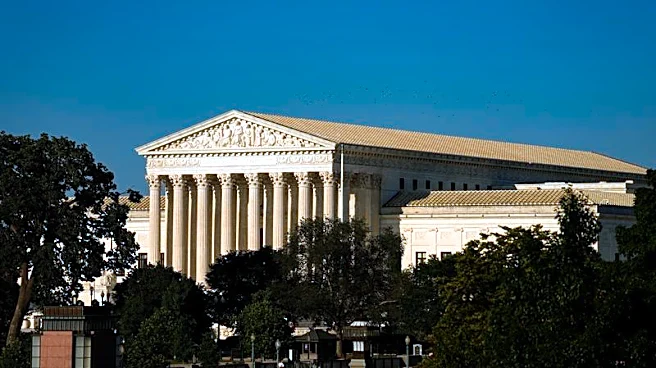
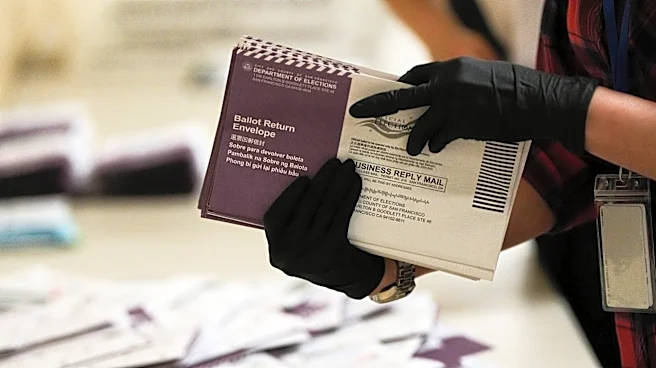
President Trump's administration has requested the Supreme Court to allow the implementation of an Executive Order that restricts mail-in voting ahead of the upcoming midterm elections. The administration argues
that the injunction against the order causes irreparable harm by impeding the President's ability to oversee the Executive Branch. Justice Ketanji Brown Jackson has asked the Democratic-led states challenging the order to respond by next Monday. The Executive Order is part of President Trump's broader election reform agenda, which includes claims of widespread voter fraud, despite evidence showing that mail-in voting fraud is rare.
Why It's Important?
This legal move could have significant implications for the upcoming midterm elections, potentially affecting voter turnout and the accessibility of voting. Mail-in voting has been a contentious issue, with debates over its security and impact on election integrity. If the Supreme Court sides with the administration, it could lead to stricter voting regulations, influencing the electoral process and possibly affecting election outcomes. The case also highlights the ongoing political and legal battles over voting rights and election security in the United States, reflecting broader tensions in the country's democratic processes.
What's Next?
The Supreme Court's decision will be closely watched, as it could set a precedent for future election-related legal challenges. If the court allows the restrictions, states may need to adjust their voting procedures, potentially leading to confusion and logistical challenges. The decision could also prompt further legal challenges and political debates over voting rights and election integrity. Stakeholders, including political parties, civil rights organizations, and voters, will likely respond to the court's ruling, shaping the discourse around voting access and election security in the lead-up to the midterms.