






What's Happening?
The SAFER SKIES Act's Interim Final Rule, which grants SLTT agencies counter-UAS authority, has sparked privacy concerns due to its data management provisions. The rule categorizes C-UAS data into control communications, raw sensor data, and pattern data, each
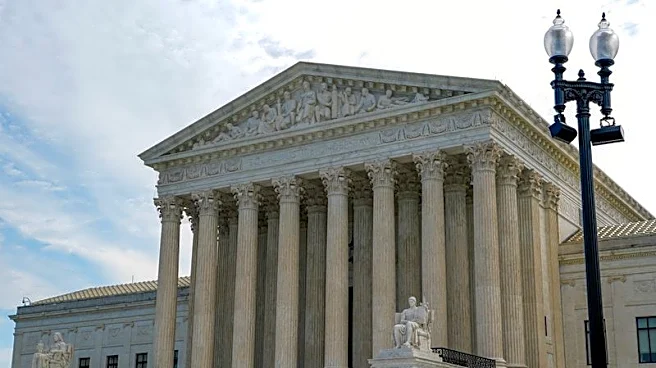
with specific retention and sharing restrictions. A recent industry comment highlights the challenge of balancing data handling with privacy protections, especially for smaller agencies lacking resources. Additionally, a constitutional critique argues that the rule's allowance for electronic tracking without a warrant may violate Fourth Amendment rights, as highlighted by the Supreme Court's decision in Chatrie v. United States.
Why It's Important?
The rule's implementation has significant implications for privacy and compliance in the drone industry. It affects how agencies collect and manage data, potentially impacting civil liberties. The tension between ensuring airspace safety and protecting individual privacy rights is a critical issue for technology vendors and law enforcement agencies. The rule's effectiveness depends on the industry's ability to design systems that comply with privacy standards while enabling effective threat detection and response.
What's Next?
As the public comment period for the rule continues, industry stakeholders have the opportunity to influence its final form. Vendors are encouraged to develop systems with built-in privacy protections and compliance features to address the rule's challenges. The ongoing debate over privacy and data management in drone operations is likely to continue, with potential legal challenges and further regulatory developments on the horizon.