






What's Happening?
Poland has politically endorsed the European Union's concept of 'return hubs' for migrants who do not qualify for asylum within the EU, signing a letter in June with 18 other nations advocating for their rapid development. However, Poland will not directly
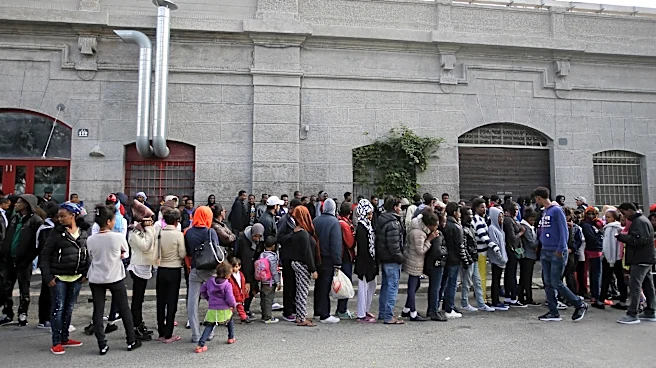
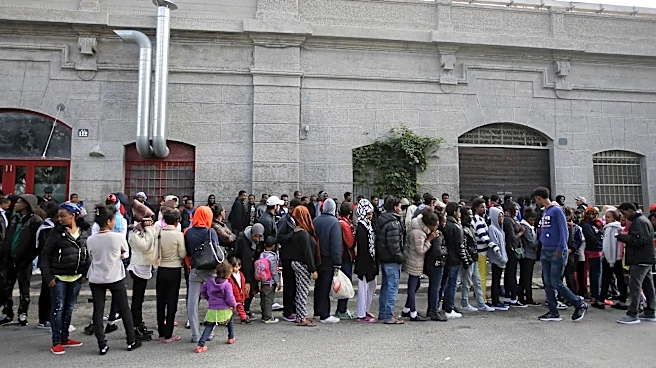
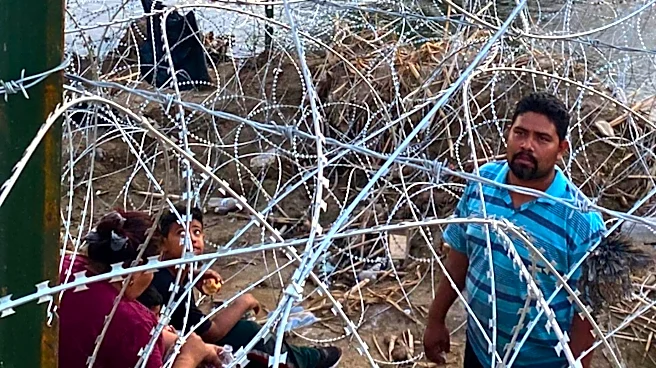
participate in establishing these centers, which are proposed for countries like Rwanda and Uganda, with a potential operational start in 2027. According to unofficial information from RMF FM, Poland's decision stems from its unique migration situation, as it does not currently have migrants for whom such a solution—sending them to Rwanda or Uganda—would be applicable. Five EU countries—Germany, Austria, Denmark, Greece, and the Netherlands—are actively working on this project and met in Copenhagen, where Poland was not represented. Despite this, Poland's Deputy Minister of Interior and Administration, Maciej Duszczyk, confirmed that Warsaw is kept informed of the progress and maintains contact with the participating states. Poland's primary focus remains on securing EU-level acceptance for its approach to individuals who forcefully breach EU borders, seeking the ability to temporarily restrict asylum applications for those using violence or organized methods to cross.
Why It's Important?
The EU's initiative to establish 'return hubs' outside its borders represents a significant shift in migration policy, aiming to manage irregular migration more effectively by processing asylum claims and facilitating returns in third countries. This approach could alleviate pressure on frontline EU member states and potentially deter future irregular migration attempts. For the U.S., while not directly involved, such policies in Europe can influence global discussions on migration management and international cooperation on refugee issues. The debate over external processing centers raises complex questions about human rights, international law, and the responsibility of nations towards asylum seekers. Poland's stance highlights the diverse migration challenges and priorities within the EU, where some nations face different pressures and thus adopt varied strategies. The success or failure of these 'return hubs' could set precedents for how developed nations manage migration flows, potentially impacting international norms and bilateral agreements with transit and origin countries.
What's Next?
The five EU countries actively pursuing the 'return hubs' initiative aim to finalize agreements with a non-EU country regarding the operational principles of these centers by the end of the current year. Rwanda and Uganda are currently being considered as potential locations, with the first centers possibly becoming operational by 2027. Poland will continue to monitor these developments and remain in contact with the participating states, while its own diplomatic efforts will focus on gaining EU approval for its border management policies, particularly concerning the temporary restriction of asylum applications for individuals who attempt to cross borders forcefully. The broader EU will likely continue to debate the legal and ethical implications of external processing centers, potentially leading to further policy adjustments or new legislative frameworks. The implementation of these hubs will also face scrutiny from international human rights organizations and could lead to legal challenges, shaping the future of international migration law and policy.
Beyond the Headlines
The concept of 'return hubs' extends beyond immediate migration management, touching upon deeper ethical and legal considerations regarding international protection and sovereignty. Critics often raise concerns about the potential for human rights violations in third countries, the erosion of asylum rights, and the outsourcing of humanitarian responsibilities. The involvement of countries like Rwanda and Uganda also brings to light the complex geopolitical dynamics and potential for economic incentives influencing their participation. For the U.S., which also grapples with border security and migration challenges, the European experience with external processing could offer insights into alternative approaches, though direct applicability would depend on differing legal frameworks and geopolitical contexts. This policy also reflects a growing trend among developed nations to externalize migration controls, which could lead to a redefinition of international refugee protection mechanisms and the principle of non-refoulement, potentially shifting the burden of responsibility to less resourced nations.