





What's Happening?
Residents along the Texas Gulf Coast are demanding immediate action to improve safety on State Highway 361 in Port Aransas following a series of fatal collisions. State Representative Todd Hunter, alongside other state and county lawmakers, met with representatives
from the Texas Department of Transportation (TxDOT) and the Texas Department of Public Safety (DPS) to address these concerns. A petition titled 'Make Highway 361 Safer' has garnered over 4,025 signatures, pushing for swift changes. The discussions focused on implementing safety measures, increasing law enforcement presence, and potentially lowering speed limits. Rep. Hunter emphasized the need for concrete actions over further studies, aiming to fast-track solutions for what many residents describe as a 'scariest' and 'dangerous' highway. The community's frustration stems from the perceived lack of action despite numerous lives lost on this two-lane stretch of road. The proposed changes include both short-term immediate plans and a long-term strategy to redesign the highway's concept.
Why It's Important?
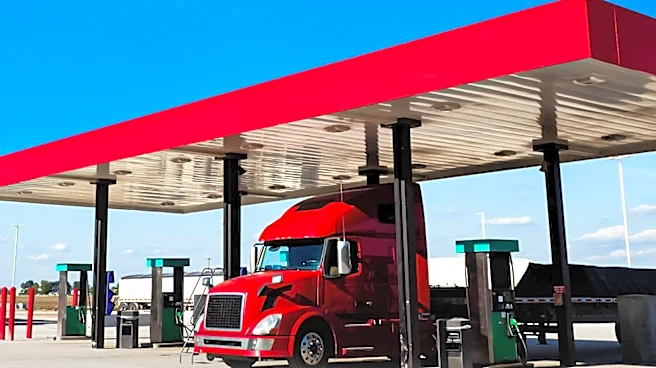
The push for safety improvements on Highway 361 highlights a critical issue of infrastructure safety and public accountability in Texas. The highway's reputation as 'the scariest' underscores the severe impact of road conditions on public safety and quality of life for residents and visitors in the Gulf Coast region. The involvement of State Representative Todd Hunter and other lawmakers signifies a recognition of the urgency and public demand for change, potentially setting a precedent for how state agencies respond to community-led initiatives regarding hazardous infrastructure. The proposed measures, such as increased law enforcement and potential speed limit reductions, could serve as a model for addressing similar issues on other dangerous roadways across the state. Furthermore, the development of a new gas station on North Padre Island, near a busy intersection of Highway 361, indicates anticipated growth in traffic, making these safety upgrades even more critical to prevent future fatalities and ensure the region's continued development is sustainable and safe.
What's Next?
Following the meeting, a weekly call has been scheduled with the Nueces County legislative delegation, DPS, and TxDOT to monitor the progress of the proposed safety measures. State Representative Todd Hunter is pushing for a fast-tracked project timeline, emphasizing the need for immediate movement and decisions. By Friday, the Texas Department of Transportation is expected to launch a communication portal, allowing the public to submit their ideas and plans for Highway 361. After a two-week period, a public meeting will be held at a physical location where residents can directly share their concepts with DPS and TxDOT officials. These steps indicate a commitment to public engagement and a structured approach to implementing both short-term and long-term solutions. The focus will be on tangible actions, including new signage, potential speed limit reductions, and a comprehensive redesign of the highway's concept, with the goal of satisfying public demand for improved safety.
Beyond the Headlines
The community's outcry over Highway 361 extends beyond immediate safety concerns, touching upon broader themes of civic engagement and governmental responsiveness. The successful mobilization of residents through a petition demonstrates the power of grassroots movements in influencing public policy and infrastructure development. This situation also brings to light the challenges faced by rapidly developing coastal areas, where increased traffic from tourism and new businesses can quickly outpace existing infrastructure, leading to dangerous conditions. The emphasis on 'no more talk' and 'get it done' from Rep. Hunter reflects a growing public impatience with bureaucratic delays and a demand for proactive governance. The long-term implications could include a re-evaluation of how infrastructure projects are prioritized and funded in Texas, particularly in areas experiencing significant growth, ensuring that safety is integrated into development plans from the outset rather than being addressed reactively after tragedies occur. This case could serve as a blueprint for other communities facing similar challenges with outdated or dangerous roadways.