




What's Happening?
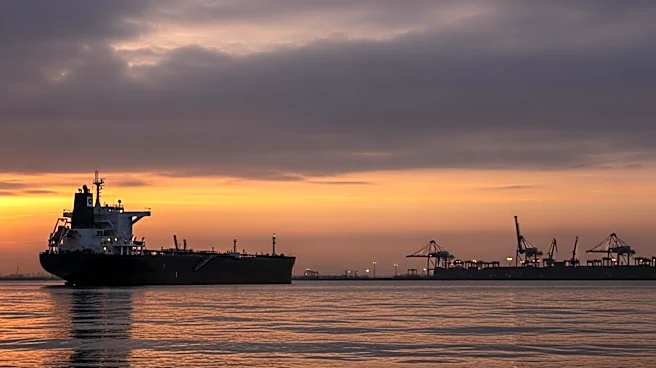
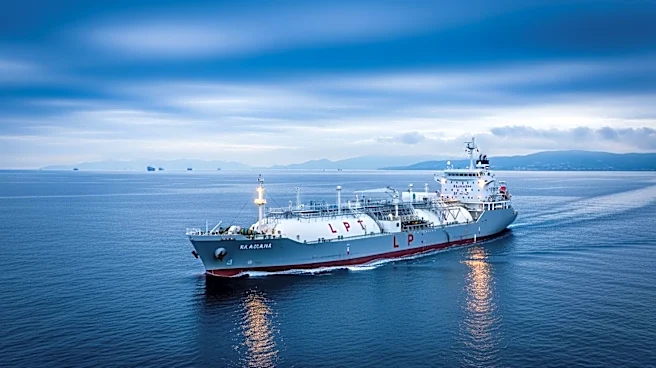
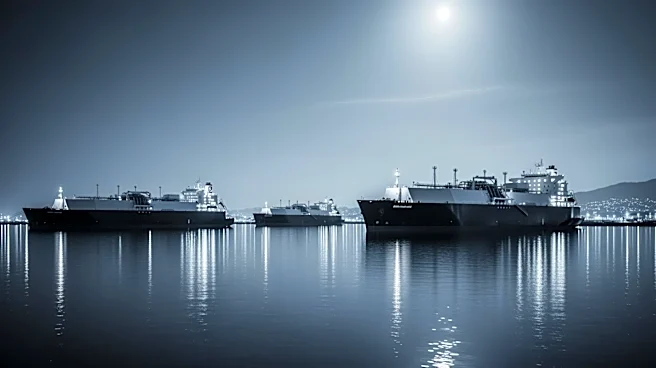
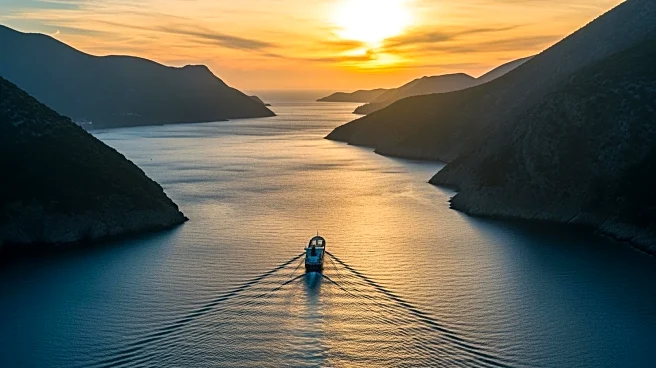
Nearly 50 liquefied natural gas (LNG) carriers used by Qatar are idled across Asia due to the ongoing Middle Eastern conflict, according to data from Kpler. These vessels, typically used to export superchilled fuel, are currently empty and stationed in locations
such as West India, Sri Lanka, and offshore Singapore. The idling of these carriers represents a significant loss in LNG carrier capacity, estimated at over 3.456 million tons. The disruption in global LNG trade has led China to resell record amounts of liquefied gas to other Asian countries, leveraging its solid stockpiles and reduced domestic demand. However, the conflict has started to sap demand for liquefied gas across Asia, as supply tightness pushes prices higher, exacerbated by competition from Europe.
Why It's Important?
The idling of Qatar's LNG carriers highlights the broader impact of the Middle Eastern conflict on global energy markets. The disruption in LNG supply chains has significant implications for energy security, particularly in Asia, where countries rely heavily on imported LNG. The situation underscores the vulnerability of global energy markets to geopolitical tensions and the need for diversified energy sources. The increased competition for LNG supplies could lead to higher energy costs for consumers and industries, potentially impacting economic growth. Additionally, the situation may prompt countries to reassess their energy strategies and explore alternative energy sources to mitigate future supply disruptions.
What's Next?
As the Middle Eastern conflict continues, the global LNG market may face further disruptions, leading to increased volatility in energy prices. Countries affected by the supply disruption may seek alternative energy sources or increase diplomatic efforts to resolve the conflict. The situation could also prompt discussions on energy security and the need for investments in renewable energy sources. Additionally, the international community may increase pressure on the parties involved in the conflict to reach a resolution and stabilize energy markets. The long-term impact on global energy policies and investments in LNG infrastructure could also be significant.