



What's Happening?
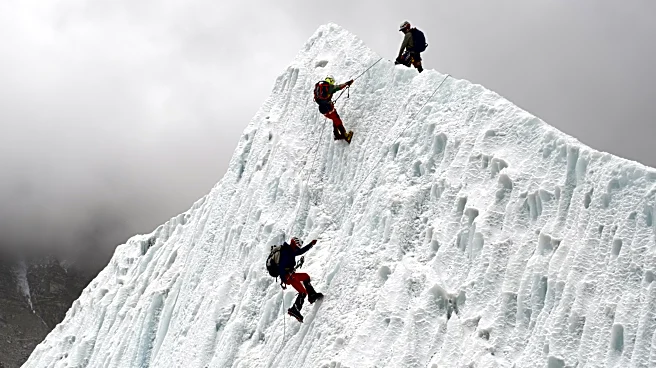
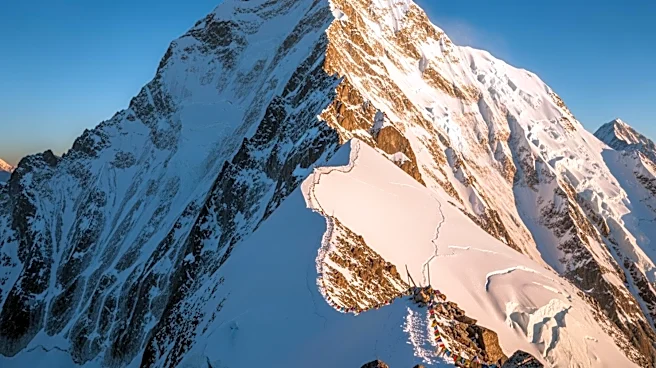
A record 274 climbers reached the summit of Mount Everest in a single day, driven by a brief window of favorable weather. The ascents were concentrated on the southern route through Nepal, as the northern route from Tibet was closed by Chinese authorities.
This surge in climbers has raised concerns about overcrowding and safety, particularly in the 'death zone,' where oxygen levels are critically low. The climbing season began later than usual due to a large serac blocking the main route, compressing the timeframe for summit attempts.
Why It's Important?
The record number of climbers highlights the increasing popularity of Everest expeditions, but also underscores the risks associated with overcrowding. The 'death zone' poses significant dangers, and bottlenecks can lead to prolonged exposure to these harsh conditions. The situation raises questions about the sustainability of such high volumes of climbers and the environmental impact on Everest. Authorities may need to reassess permit issuance and implement stricter safety protocols to prevent future tragedies.
What's Next?
As the climbing season continues, stakeholders, including expedition organizers and government officials, will likely engage in discussions to address the challenges of overcrowding and ensure climbers' safety. The focus will be on balancing the desire for record-setting achievements with the need to protect climbers' lives and the mountain's environment. Authorities may also consider measures to manage the number of climbers and enhance safety protocols.