







What's Happening?
Europe's new Entry-Exit System (EES), a digital system designed to record biometric information and entry/exit dates for non-EU visitors in the Schengen Area, has been plagued with problems. The system, intended to replace traditional passport stamps
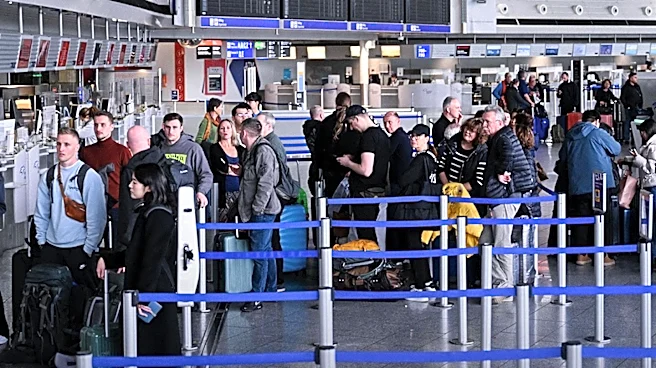
and speed up border checks, has instead led to long queues, slower processing times, and instances of wrongful accusations of overstaying. For example, a British woman, Paula Pugh, was mistakenly accused of overstaying due to the EES database failing to record a previous exit. The EES records fingerprints and facial scans upon a non-EU visitor's first entry, storing this data for subsequent electronic gate processing. However, software glitches, kiosk shortages, and issues with biometric scans have caused significant disruptions, leading to some countries temporarily suspending biometric checks.
Why It's Important?
The issues with Europe's EES have significant implications for U.S. travelers planning visits to the Schengen Area. While the system primarily impacts non-EU citizens, including Americans, the widespread problems could lead to increased wait times and potential complications at European borders. The shift from physical passport stamps to a digital record means that travelers must be more vigilant about tracking their own stays, as the system's inaccuracies could lead to severe penalties, including fines, entry bans, or even deportation. This situation highlights the challenges of implementing large-scale digital systems for international travel and the potential for technological failures to disrupt global mobility and tourism, impacting U.S. citizens' travel experiences and plans.
What's Next?
The European Commission has introduced emergency flexibility measures, allowing individual member states to pause biometric checks during peak visitor arrivals, with several countries receiving informal approval to suspend EES processing indefinitely. Airline industry representatives and major travel organizations are pressuring the EC to maintain these suspensions. Travelers are advised to meticulously track their own entry and exit dates using the European Commission’s Short Stay Calculator and to retain boarding passes and booking confirmations as proof of travel. The ongoing issues suggest that the EES may continue to cause disruptions for non-EU travelers, including U.S. citizens, until the system's technical and operational challenges are fully resolved.
Beyond the Headlines
The EES rollout exposes the complex interplay between national security, technological innovation, and international travel. While the system aims to enhance border security and detect overstays, its flawed implementation has created a climate of uncertainty and frustration for legitimate travelers. This situation raises questions about the reliability of purely digital systems for critical functions like border control and the importance of robust testing and contingency planning. The experience with the EES could influence how other nations or blocs approach similar digital border initiatives, emphasizing the need for user-friendly, accurate, and resilient systems to avoid unintended consequences for global tourism and international relations. It also underscores the importance of individual preparedness and documentation in an increasingly digital travel landscape.