






What's Happening?
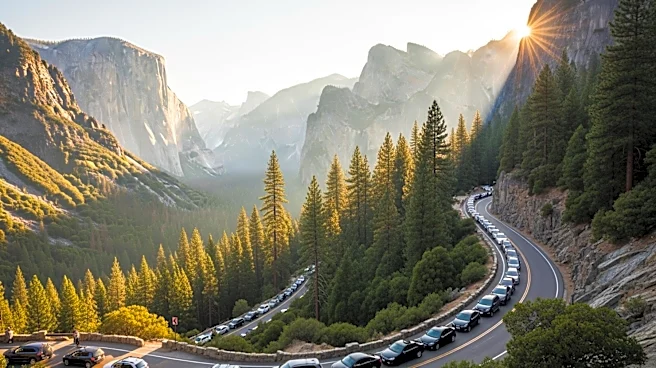
Yosemite National Park has experienced significant congestion and overcrowding following the removal of its timed reservation system. This change, implemented for the first summer season, has resulted in long lines, limited parking, and crowded conditions
throughout the park. The park has recorded nearly 100,000 more visitors compared to the same period last year. Visitors have reported waiting times of over an hour and a half to enter the park, with parking spaces filling up quickly. Some visitors have resorted to parking illegally, contributing to the chaotic environment. The decision to end the reservation system was made after a comprehensive evaluation by park officials, who are committed to maintaining visitor access, safety, and resource protection through active traffic management strategies.
Why It's Important?
The removal of the reservation system at Yosemite National Park has significant implications for both tourism and environmental management. While the decision may boost tourism revenue by allowing more visitors, it raises concerns about the park's capacity to handle increased traffic without compromising the environment. Environmental advocates argue that the previous system helped control crowds and protect the park's natural resources. The current situation highlights the challenge of balancing visitor access with environmental preservation. The park's infrastructure and staffing may struggle to accommodate the surge in visitors, potentially leading to negative impacts on the park's ecosystem and visitor experience.
What's Next?
As the peak summer season approaches, there are calls for adjustments to manage the increased visitor numbers effectively. Suggestions include reintroducing some form of reservation system or implementing alternative strategies to control the flow of visitors. The Yosemite Conservancy recommends visitors arrive early, visit during weekdays, or use bus transportation to avoid crowds. Park officials may need to reassess their traffic management strategies to ensure a sustainable balance between accessibility and environmental protection. Ongoing monitoring of visitor patterns and feedback will be crucial in determining the best approach moving forward.