
What's Happening?
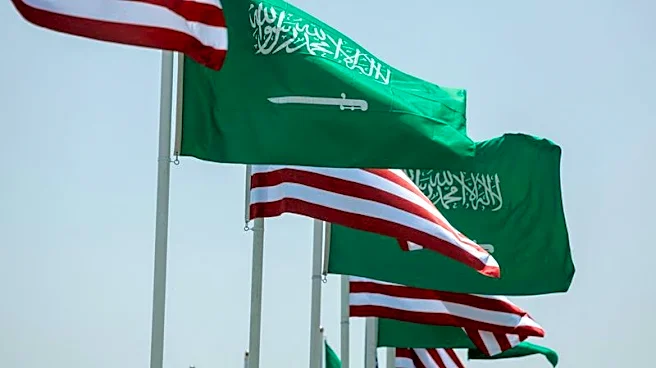
The United States and Saudi Arabia have entered into a civilian nuclear cooperation agreement, as announced by the Trump administration. This deal, hailed as 'historic' by the US Department of Energy,
involves American companies providing nuclear technology to Saudi Arabia. The agreement is structured under Section 123 of the Atomic Energy Act of 1954, known as a 123 agreement, and includes a bilateral safeguards agreement. The deal is part of a broader effort to strengthen US-Saudi commercial relations and is expected to create jobs in the US. The agreement will be submitted to Congress for review. While the deal is intended to reinforce global nonproliferation standards, there are concerns about potential uranium enrichment by Saudi Arabia, which could face opposition in Washington.
Why It's Important?
This agreement is significant as it represents a deepening of ties between the US and Saudi Arabia, particularly in the realm of nuclear technology. It underscores the US's strategic interest in maintaining influence in the Middle East and countering Iran's nuclear ambitions. The deal is also poised to bolster the US economy by creating jobs and enhancing the commercial relationship with Saudi Arabia. However, the potential for Saudi Arabia to enrich uranium domestically raises concerns about nuclear proliferation in a volatile region. The agreement's impact on US foreign policy and its alignment with nonproliferation goals will be closely scrutinized by Congress and international observers.
What's Next?
The agreement will undergo a review process by the US Congress, where it may face scrutiny, particularly regarding the provisions related to uranium enrichment. The outcome of this review could influence the future of US-Saudi relations and the broader geopolitical dynamics in the Middle East. Additionally, the deal's implementation will be monitored to ensure compliance with nonproliferation standards. The US administration will likely engage in diplomatic efforts to address any concerns raised by lawmakers and international partners.