






What's Happening?
U.S. Senators Shelley Moore Capito (R-W.Va.), Chairman of the Senate Environment and Public Works (EPW) Committee; Mike Lee (R-Utah), Chairman of the Senate Energy and Natural Resources (ENR) Committee; Sheldon Whitehouse (D-R.I.), Ranking Member of the EPW Committee; and Martin
Heinrich (D-N.M.), Ranking Member of the ENR Committee, have jointly introduced the Bipartisan American Affordability and Jobs Act of 2026. This legislation aims to reform the federal environmental review and permitting processes. The senators assert that this agreement will lead to cheaper energy, more jobs, and responsible growth across the United States. The bill seeks to provide certainty that permitted energy and infrastructure projects will retain their permits, absent extraordinary circumstances, violations of law, or court orders, and includes targeted reforms for various energy projects. It also mandates that data centers pay for all their associated transmission costs, ensuring they contribute their fair share to grid upgrades.
Why It's Important?
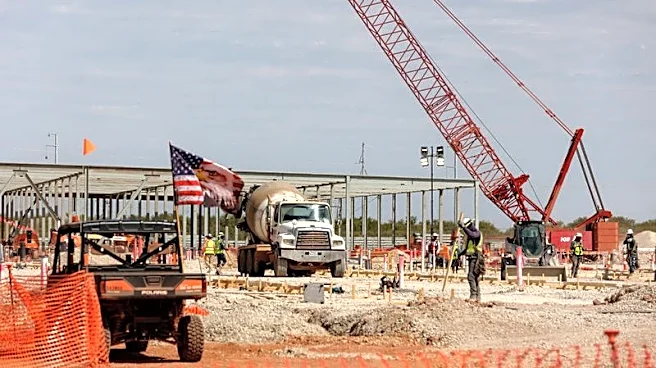
The current federal environmental review and permitting processes are widely considered outdated and burdensome, leading to significant delays and increased costs for infrastructure and energy projects. According to the National Association of Manufacturers (NAM), these delays cost manufacturers $8 billion annually, hindering their ability to hire, build, and expand operations. Senator Lee emphasized that America's permitting system takes too long and costs too much, contrasting it with historical projects like the Hoover Dam that were built in years, not decades. This bipartisan agreement is crucial for accelerating the deployment of energy projects, including clean energy initiatives, and bringing critical infrastructure online faster. By streamlining these processes, the act aims to unlock greater investment and growth across various industries, reduce energy bills for consumers, and create more jobs. The provision requiring data centers to cover their transmission costs addresses a growing concern about the strain these facilities place on the energy grid.
What's Next?
The Bipartisan American Affordability and Jobs Act of 2026 will now proceed through the legislative process in the Senate. Senate Majority Leader John Thune (R-SD) and Senate Minority Leader Chuck Schumer (D-NY) are urged to act on this agreement, and all senators are encouraged to advance these critical permitting reforms. Following Senate action, the legislation would need to move expeditiously through the House of Representatives to reach President Trump's desk for signature. The broad bipartisan support from key committee leaders suggests a strong impetus for its passage. Stakeholders, including manufacturers and energy developers, will be closely watching the progress of this bill, as its enactment could significantly impact their operational timelines and costs. The focus will be on maintaining the bipartisan consensus and ensuring the bill's provisions effectively address the stated goals of faster, more predictable, and cost-effective permitting.
Beyond the Headlines
This legislative effort has deeper implications for the U.S. economy and environmental policy. While aiming to accelerate development, it also seeks to maintain America's commitment to environmental stewardship, suggesting a delicate balance between economic growth and ecological protection. The act's success could redefine the efficiency of federal project approvals, potentially influencing future infrastructure development models. Ethically, it raises questions about how quickly projects can be approved without compromising thorough environmental impact assessments. Culturally, it reflects a growing consensus that bureaucratic hurdles can impede progress, regardless of political affiliation. The long-term shift could see a more agile regulatory environment, but also necessitates robust oversight to prevent unintended environmental consequences. The emphasis on data centers paying their fair share also highlights the increasing energy demands of the digital economy and the need for equitable cost distribution for infrastructure upgrades.