


What's Happening?
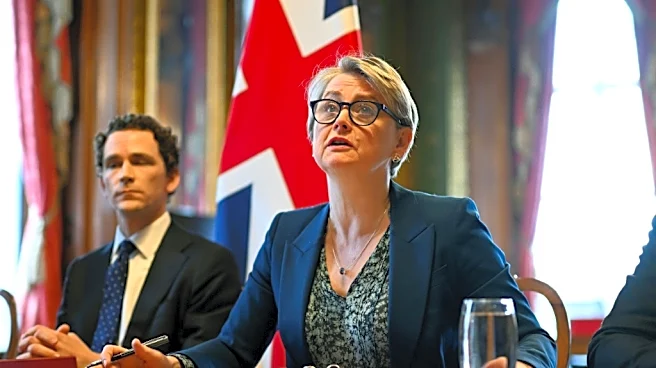
The United Kingdom has convened a virtual meeting with diplomats from over 40 countries to discuss reopening the Strait of Hormuz, a vital shipping route affected by the U.S.-Israeli war against Iran. The closure of the strait has significantly impacted
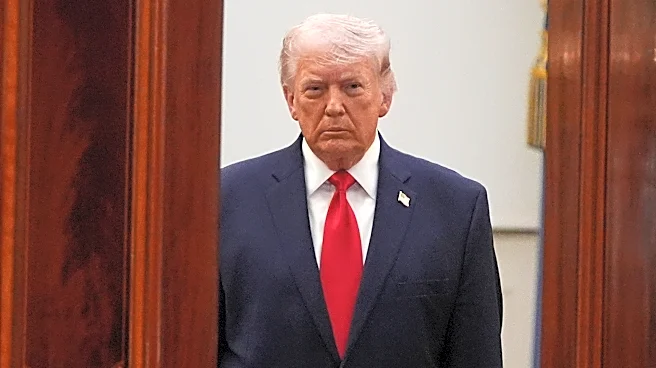
global oil supply, leading to spikes in oil and food prices worldwide. The U.S. is notably absent from these talks, as President Donald Trump has stated that securing the waterway is not America's responsibility. The UK Foreign Secretary Yvette Cooper emphasized the need for diplomatic and international planning to ensure the strait's safe reopening, highlighting the global economic impact of its closure.
Why It's Important?
The closure of the Strait of Hormuz has severe implications for the global economy, particularly for countries reliant on oil transported through this route. The international community's response, led by the UK, reflects a collective effort to address the economic fallout and ensure the security of global shipping lanes. The absence of the U.S. in these discussions signals a shift in international dynamics and raises questions about America's role in global security matters. The situation also highlights the vulnerability of global supply chains to geopolitical conflicts.
What's Next?
Countries involved in the talks are expected to continue diplomatic efforts to negotiate with Iran for the reopening of the strait. Military planners from various nations will meet to discuss security measures for commercial shipping once the conflict subsides. The international community's ability to coordinate a response will be crucial in stabilizing global markets and ensuring the safe passage of goods. The outcome of these efforts could influence future international security collaborations and economic policies.