







What's Happening?
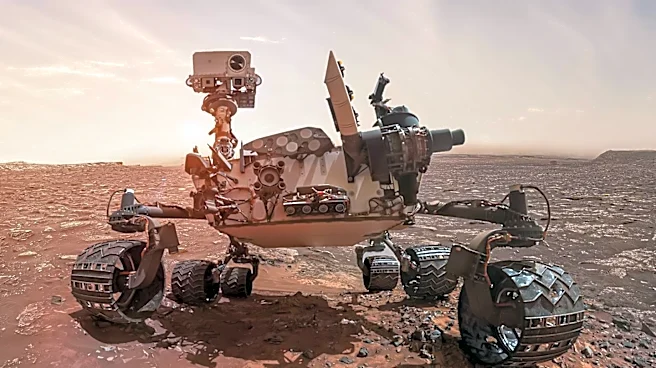
NASA's Curiosity Rover has discovered unusual polygon-shaped structures on Mars, resembling a 'giant Martian honeycomb.' These features were identified in an area initially highlighted by the Mars Reconnaissance Orbiter. Upon closer inspection, the rover
found that the area, which appeared smooth and light-colored from orbit, was covered with these polygonal structures. The presence of nickel in some of the darker stones suggests a possible meteorite origin, as nickel is rare in Martian rocks but common in meteorites. The Curiosity team is conducting further investigations to determine the origins of these features, using instruments like APXS and MAHLI to analyze the structures and surrounding materials.
Why It's Important?
The discovery of these polygonal structures on Mars provides valuable insights into the planet's geological history and surface processes. Understanding the composition and formation of these features could reveal information about past environmental conditions on Mars, including the presence of water or volcanic activity. The potential link to meteorites also offers clues about the planet's exposure to space debris and its impact on Martian geology. These findings contribute to the broader scientific goal of understanding Mars' habitability and its potential to support life, past or present. The ongoing research by Curiosity enhances our knowledge of Mars and informs future exploration missions.
What's Next?
Curiosity will continue its investigation of the polygonal structures, focusing on areas with dark-colored materials that may provide further clues about their origins. The rover's upcoming tasks include additional analysis of the 'Cortadera' cobble and other features in the vicinity. These efforts aim to clarify whether the structures are remnants of meteorites or result from other geological processes. The findings will be crucial for planning future missions and understanding the potential for life on Mars. As Curiosity progresses, it will provide more data to help scientists piece together the planet's complex history.