



What's Happening?
The New Jersey Board of Public Utilities (NJBPU) has announced the formal closeout of its five-year Schools and Small Business Energy Efficiency Stimulus (SSB) Program. This initiative, funded by a $179.2 million appropriation from the federal American
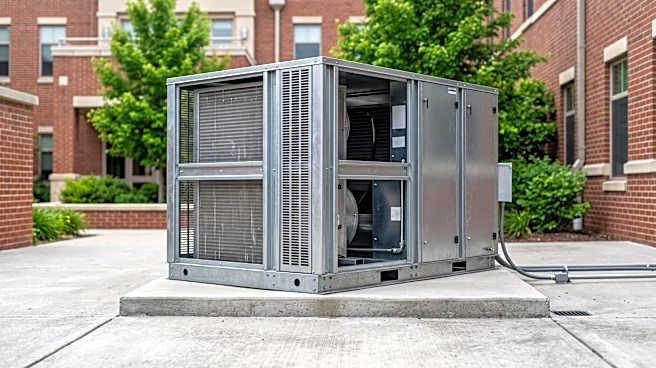
Rescue Plan Act (ARPA), supported 364 projects across New Jersey. To date, $166.2 million has been disbursed, with the remaining $13 million allocated for 19 projects currently undergoing final inspections, verification, and payment processing. The program aimed to upgrade outdated HVAC and plumbing systems in schools and small businesses, transitioning them to verified, code-compliant infrastructure. This effort was established through legislation signed in August 2021 to aid recovery from COVID-19 disruptions, focusing on improving indoor air quality, public health, and energy efficiency. Grants covered up to 75% of eligible project costs, with a significant portion, approximately 40% or $72.3 million, directed towards underserved communities, including school districts where at least 75% of students qualified for free or reduced-price meals. The majority of the funding, about 96% or $171.4 million, was dedicated to HVAC improvements, while the remaining 4% or $7.8 million supported plumbing fixture and appliance replacements.
Why It's Important?
This program's closure signifies a substantial investment in the long-term operational efficiency and public health infrastructure of New Jersey's educational institutions and small businesses. By upgrading HVAC and plumbing systems, the initiative directly addresses critical issues such as indoor air quality, which has become a heightened concern since the COVID-19 pandemic. Improved air quality in schools can lead to better learning environments and reduced health risks for students and staff, potentially decreasing absenteeism. For small businesses, these upgrades translate into lower operating costs through enhanced energy efficiency, providing a tangible economic benefit that can contribute to their sustainability and competitiveness. The focus on underserved communities ensures that the benefits of these improvements are distributed equitably, helping to alleviate financial burdens and improve conditions in areas that often face greater challenges. This strategic use of federal funds not only stimulates local economies through project implementation but also establishes a foundation for healthier and more cost-effective operations for years to come, demonstrating a proactive approach to infrastructure modernization and public welfare.
What's Next?
Although the Schools and Small Business Energy Efficiency Stimulus Program has formally closed, the NJBPU will continue with final inspections, verification, and incentive payments for the remaining 19 projects. These projects, located in various school districts including Lenape Regional High School District, Long Branch, Newark, Passaic, Brick Township, Hasbrouck Heights, Washington Township, Union Township, and City of Burlington Public Schools, will see their upgrades completed and payments processed. The agency anticipates that the preventative upgrades and replacements made through the program will continue to improve building conditions and reduce operating costs well beyond the program's conclusion. The long-term impact will be monitored through the sustained performance of the new systems. The NJBPU has made a complete list of projects and recipients available, allowing for transparency and accountability regarding the federal funds utilized. Future initiatives may draw lessons from this program's success in targeting specific infrastructure needs and leveraging federal appropriations for statewide benefits.
Beyond the Headlines
The successful closeout of the SSB Program highlights a broader trend in U.S. public policy: the strategic use of federal stimulus funds to address long-standing infrastructure deficiencies while simultaneously promoting environmental sustainability and public health. This program's emphasis on energy efficiency and indoor air quality in schools and small businesses reflects a growing recognition of the interconnectedness between infrastructure, health, and economic vitality. The ethical dimension lies in prioritizing underserved communities, ensuring that the benefits of modernization are not exclusively enjoyed by more affluent areas. This approach helps to mitigate existing inequalities and foster more resilient communities. Furthermore, the program's focus on verified, code-compliant upgrades sets a precedent for future public works, emphasizing quality and long-term impact over short-term fixes. It underscores the idea that investments in infrastructure, particularly those related to energy and environmental health, yield compounding returns in terms of reduced operational costs, improved public well-being, and enhanced community resilience against future crises.