


What's Happening?
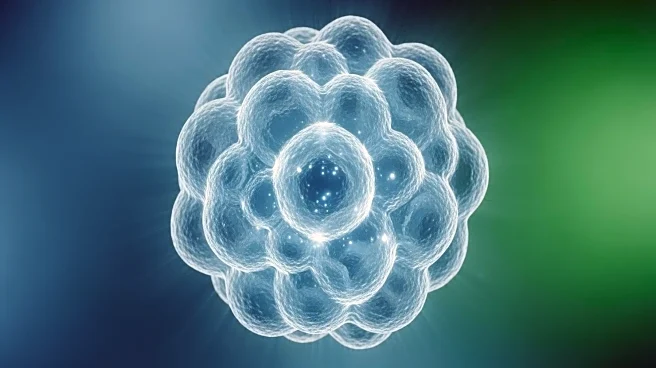
A new collection of research articles highlights the use of stem cell-based organoid models in studying infectious diseases. These organoids, derived from pluripotent and tissue stem cells, mimic many characteristics of in vivo diseases, providing insights
into human host-microbe interactions. Compared to traditional two-dimensional cultures, organoids offer a higher degree of similarity to human physiological states and possess strong self-organizing capabilities. This makes them invaluable tools for developing novel diagnostic strategies and targeted therapies for infectious diseases.
Why It's Important?
The use of organoid models in infectious disease research is significant as it allows for a more accurate representation of human disease conditions, leading to better understanding and treatment of infections. These models can accelerate the development of new therapies and diagnostics, potentially improving patient outcomes and reducing the burden of infectious diseases. The ability to study diseases in a more human-like environment can lead to breakthroughs in understanding disease mechanisms and developing more effective treatments.
What's Next?
Researchers are encouraged to submit their findings to journals like Communications Biology and Nature Communications, which are focusing on this area of study. As more research is conducted, the potential applications of organoid models in infectious disease research will likely expand, leading to new collaborations and innovations in the field. The scientific community will continue to explore the capabilities of organoids, potentially leading to new standards in disease modeling and treatment development.
Beyond the Headlines
The use of organoid models also presents ethical considerations, particularly in terms of their creation and use in research. There will be a need for guidelines to ensure ethical practices in the development and application of these models. Additionally, the success of organoid models could lead to a shift in research methodologies, emphasizing the importance of more accurate and human-relevant models in scientific studies.