
What's Happening?
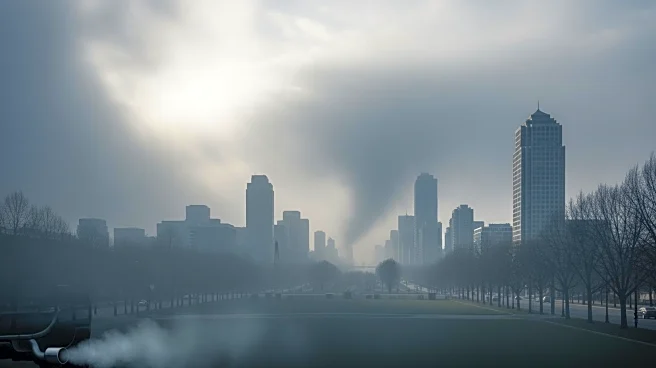
Islamabad, the capital of Pakistan, is grappling with a severe smog crisis primarily caused by vehicle emissions. Authorities have initiated a crackdown on vehicles emitting excessive pollutants, setting
up checkpoints to inspect and fine non-compliant vehicles. The Environmental Protection Agency (EPA) of Pakistan has reported that the transport sector is responsible for 53% of the toxic PM2.5 particles in the air. The city has already experienced several 'very unhealthy' days in December, with PM2.5 levels exceeding safe limits. The expansive urban layout of Islamabad, designed in the 1960s, discourages walking and limits public transport options, making private vehicles essential for residents. This has contributed significantly to the pollution problem.
Why It's Important?
The smog crisis in Islamabad highlights the broader environmental challenges faced by rapidly urbanizing regions. The health implications are significant, with residents reporting increased respiratory issues and allergies. The situation underscores the urgent need for sustainable urban planning and effective public transport systems to reduce reliance on private vehicles. The crackdown on polluting vehicles is a critical step towards improving air quality, but it also raises concerns about the economic impact on drivers who may not afford vehicle upgrades. The crisis serves as a warning for other cities facing similar issues, emphasizing the importance of proactive environmental policies.
What's Next?
The Pakistani government is expected to continue its efforts to combat vehicle emissions by expanding the network of emission inspection stations and enforcing stricter penalties for non-compliance. Public awareness campaigns may be launched to educate citizens about the health risks associated with air pollution and the importance of vehicle maintenance. Long-term solutions could involve investments in public transportation infrastructure and incentives for electric vehicle adoption. The effectiveness of these measures will be closely monitored by environmental groups and the public, who are increasingly concerned about the deteriorating air quality.
Beyond the Headlines
The smog crisis in Islamabad also raises ethical questions about environmental justice, as lower-income residents may be disproportionately affected by both the health impacts of pollution and the economic burden of vehicle compliance. The situation highlights the need for policies that balance environmental protection with social equity. Additionally, the crisis could influence Pakistan's international environmental commitments and its role in global climate change discussions.