









What's Happening?
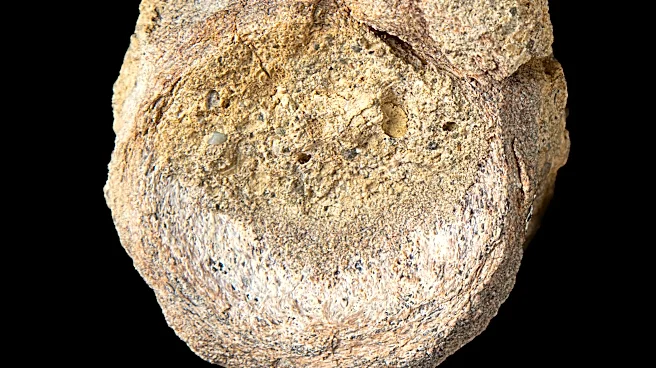
A rare dinosaur fossil from Antarctica, identified as a titanosaur tail bone, was discovered in a museum drawer after being overlooked for decades. The fossil was originally collected in 1985 by geologist Mike Thomson during an expedition to James Ross
Island. It was initially recorded as a large reptile fossil. Paleontologist Mark Evans later identified it as a dinosaur bone while examining the British Antarctic Survey's collections. The discovery was confirmed through analysis and comparison with other dinosaur remains. The findings were published in the journal Acta Palaeontologica Polonica. The dinosaur, estimated to be about 23 feet long, lived in a region that was once lush with forests.
Why It's Important?
This discovery sheds light on the prehistoric environment of Antarctica, which was once a hospitable region with lush forests, contrasting with its current icy landscape. The identification of the fossil as a titanosaur provides valuable insights into the diversity and distribution of dinosaurs in ancient ecosystems. This finding also highlights the importance of revisiting and re-evaluating existing collections in museums, as they may hold significant scientific discoveries. The use of modern technology in analyzing the fossil demonstrates advancements in paleontological research, allowing for more detailed understanding of ancient life.