



What's Happening?
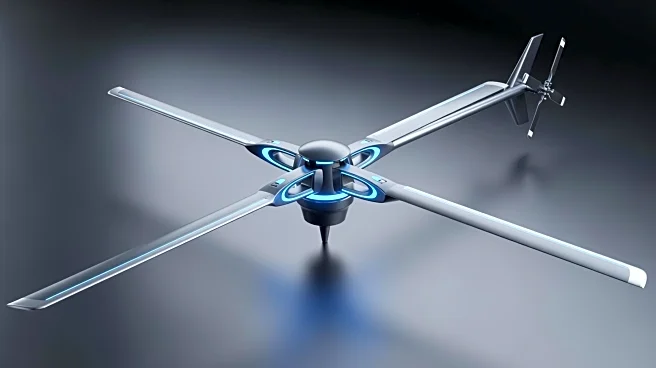
Airbus Helicopters has unveiled two new rotorcraft concepts as part of the NATO Next-Generation Rotorcraft Capability (NGRC) program. These concepts include a high-performance conventional helicopter and a novel high-speed compound rotorcraft. The announcement
was made ahead of the IQPC International Military Helicopter 2026 conference in London. The designs are set to undergo detailed study requirements, marking a transition from the initial concept studies phase to the concept design activities phase. Airbus Helicopters aims to provide platforms that meet military partners' needs in terms of affordability, operational efficiency, and maximum availability. The proposals have been developed in collaboration with RTX businesses Collins Aerospace and Raytheon, and MBDA, focusing on modularity and simplicity to ensure long-term affordability.
Why It's Important?
The development of next-generation rotorcraft concepts by Airbus Helicopters is significant for NATO's military capabilities. These advanced designs promise enhanced operational efficiency and affordability, which are crucial for modern military operations. The collaboration with major aerospace and defense companies like Collins Aerospace, Raytheon, and MBDA underscores the strategic importance of these developments. The modular open systems architecture approach ensures that the rotorcraft can be easily manufactured, maintained, and upgraded, providing NATO with flexible and sustainable military assets. This initiative could strengthen NATO's defense posture and improve interoperability among member states.
What's Next?
The next steps involve detailed study requirements for the rotorcraft concepts, which will be discussed further with military partners. Airbus Helicopters will continue to refine these designs to align with NATO's vision and operational needs. The focus will be on ensuring that the rotorcraft are highly connected and share commonalities in maintenance, training, weapons, and systems. As the NGRC program progresses, stakeholders will likely evaluate the potential integration of these rotorcraft into NATO's existing fleet, considering factors such as cost-effectiveness and technological advancements.
Beyond the Headlines
The unveiling of these rotorcraft concepts highlights the ongoing innovation in military aviation technology. The emphasis on modularity and simplicity reflects a broader trend towards adaptable and sustainable military solutions. This development could influence future military procurement strategies, encouraging a shift towards platforms that offer long-term value and flexibility. Additionally, the collaboration between Airbus Helicopters and other major defense companies may set a precedent for future partnerships in the aerospace industry, fostering innovation and technological advancement.