








What's Happening?
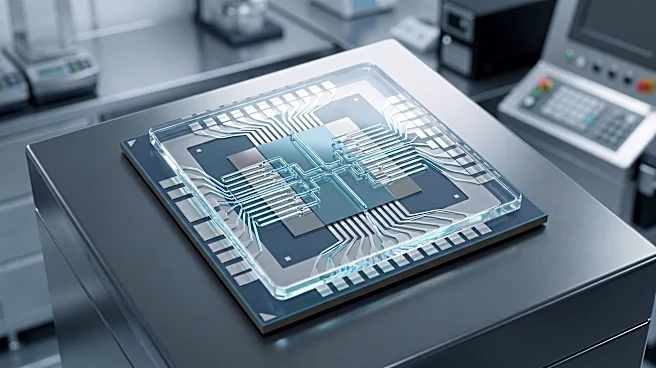
Northrop Grumman is making significant strides in developing diamond-cooled microchip technology for high-power defense applications. Under a $7 million contract from the Defense Advanced Research Projects Agency (DARPA) through its THREADS program, the company
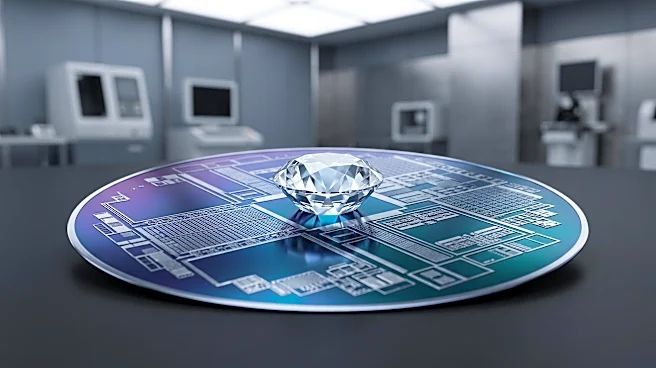
is integrating diamond-based cooling into next-generation semiconductor devices. This technology aims to enable military radar, communications, and other high-performance systems to operate at higher power levels without the overheating limitations commonly faced by conventional electronics. Heat is a major challenge for modern radio frequency (RF) devices, often forcing systems to operate below their maximum capability, which can reduce power output, shorten operating life, and affect reliability during critical missions. Diamond offers a solution due to its exceptional heat conductivity.
Why It's Important?
This advancement is crucial for U.S. national security and defense capabilities. By enabling microchips to operate at higher power and efficiency, it directly enhances the performance and reliability of critical military systems. Stronger RF transmitters for military communications and satellite links are vital for maintaining a technological edge and ensuring secure, robust communication channels for U.S. forces globally. The ability to increase power without the risk of burnout means that defense systems can perform more effectively in demanding environments, potentially leading to more capable and resilient military hardware. This technology also reduces the need for bulky and heavy cooling systems, which can be a significant advantage in aerospace and mobile defense platforms, ultimately impacting the operational effectiveness and strategic deployment of U.S. military assets.
What's Next?
Northrop Grumman's Phase 2 efforts under the DARPA THREADS program will focus on further increasing the power capability of these diamond-cooled chips by more than three times, while maintaining a compact device footprint. The company, in collaboration with Stanford University, will continue to refine the process of growing a diamond layer on the backside of semiconductor devices and integrating it into microscopic channels to efficiently transfer heat. The ultimate goal is to move this diamond-based cooling technology closer to practical implementation in high-power semiconductor systems for defense and potentially commercial applications. Future developments will likely involve rigorous testing and integration into various military platforms to validate its performance and reliability in real-world scenarios.
Beyond the Headlines
The development of diamond-cooled microchip technology by Northrop Grumman represents a significant leap in materials science and engineering, pushing the boundaries of what is possible in high-performance electronics. Beyond its immediate defense applications, this innovation could have profound implications for other sectors requiring extreme thermal management, such as high-performance computing, data centers, and even advanced consumer electronics. The ability to manage heat more effectively at the device level could unlock new levels of performance and miniaturization across various technologies. This research also highlights the ongoing strategic importance of government-funded initiatives like DARPA in fostering groundbreaking technological advancements that have both military and broader societal benefits, driving innovation that might otherwise be too risky or long-term for purely commercial ventures.