
What's Happening?
A recent study conducted by researchers from the University of Wisconsin-Madison and Rhodium Scientific Inc. has revealed significant findings regarding the behavior of microbes in space. The research involved
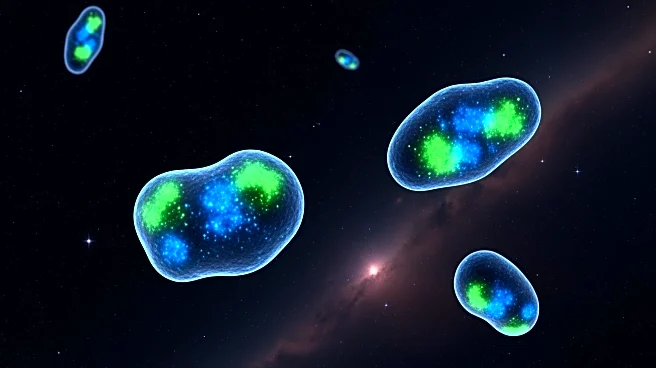
sending Escherichia coli bacteria and T7 bacteriophages to the International Space Station (ISS) to observe their interactions in microgravity. Over a 25-day period, scientists discovered that the weightlessness of space altered the evolutionary trajectory of these organisms. Bacteria developed mutations in genes related to stress response and nutrient management, while phages adapted to continue infecting their hosts. Notably, certain space-induced phage mutations were found to be highly effective against antibiotic-resistant bacteria responsible for urinary tract infections (UTIs). This research, published in PLOS Biology, highlights the potential of engineered phages as a promising alternative to traditional antibiotics.
Why It's Important?
The findings from this study are significant as they offer a potential new approach to tackling antibiotic-resistant infections, a growing concern in global health. With over 90% of UTI-causing bacteria being resistant to antibiotics, the ability to engineer phages with enhanced activity against these pathogens could revolutionize treatment options. This research underscores the importance of space-based studies in providing unique insights into microbial evolution and adaptation, which could lead to breakthroughs in medical treatments on Earth. The study also emphasizes the potential of phage therapy as a viable alternative to combat drug-resistant bacteria, which could have far-reaching implications for public health and the pharmaceutical industry.
What's Next?
Following these promising results, further research is likely to focus on refining the engineering of phages to enhance their efficacy against a broader range of drug-resistant bacteria. Collaboration between space agencies, research institutions, and biotech companies may increase to explore additional applications of space-driven microbial adaptations. Regulatory bodies might also begin to consider the implications of phage therapy in clinical settings, potentially leading to new guidelines and approval processes for these treatments. The success of this research could pave the way for more space-based biological studies, expanding our understanding of microbial behavior in microgravity and its applications on Earth.