







What's Happening?
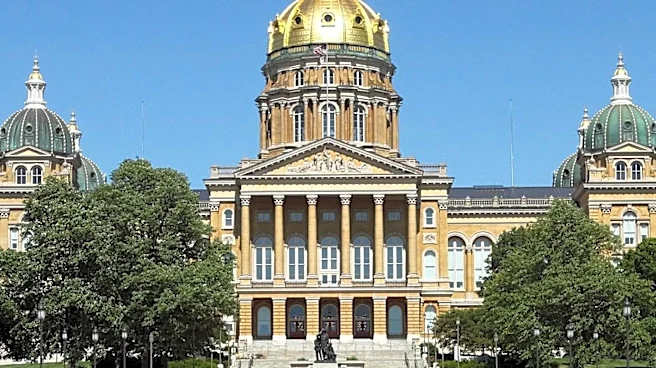
Iowa Governor Kim Reynolds has signed House File 2568 into law on May 3, 2024. This legislation, which was introduced on February 19, 2024, pertains to nonvehicular traffic, specifically addressing pedestrian conveyances and bicyclists' right-of-way at certain
crosswalks. The bill also includes provisions for applicable penalties. The enactment of HF 2568 signifies a formal update to Iowa's traffic regulations, aiming to clarify and potentially enhance safety for pedestrians and cyclists. The law defines 'pedestrian conveyance' to include human-powered devices like wheelchairs, strollers, skateboards, and scooters, as well as electric personal assistive mobility devices under a certain wattage, but explicitly excludes bicycles. It also amends existing code sections related to yielding right-of-way and giving audible signals.
Why It's Important?
The enactment of HF 2568 is significant for several reasons, primarily impacting public safety and urban planning within Iowa. By clearly defining 'pedestrian conveyances' and establishing right-of-way rules, the law aims to reduce conflicts and accidents between various modes of nonvehicular traffic and motor vehicles. This could lead to safer streets for pedestrians, cyclists, and users of other human-powered devices, particularly in urban and suburban areas with high traffic volumes. For municipalities, the law provides clearer guidelines for traffic management and infrastructure planning, potentially influencing the design of crosswalks and shared pathways. The inclusion of penalties also provides a legal framework for enforcement, encouraging compliance and promoting a more orderly flow of traffic for all road users. This legislation reflects a growing trend in states to adapt traffic laws to accommodate diverse forms of personal mobility.
What's Next?
With HF 2568 now enacted, the next steps will involve its implementation and enforcement across Iowa. Local law enforcement agencies will need to familiarize themselves with the updated definitions and regulations to ensure consistent application. Public awareness campaigns may be initiated to inform residents, particularly pedestrians and cyclists, about their rights and responsibilities under the new law. Over time, the effectiveness of HF 2568 in improving traffic safety will likely be assessed through accident statistics and public feedback. There may also be subsequent legislative efforts to refine or expand upon these regulations as new forms of nonvehicular transportation emerge or as practical challenges in implementation become apparent. The law's impact on urban planning and infrastructure development will also be observed as cities adapt to the new legal framework.
Beyond the Headlines
Beyond its immediate impact on traffic safety, HF 2568 reflects a broader societal shift towards more diverse and sustainable modes of transportation. The explicit recognition and regulation of 'pedestrian conveyances' highlight an evolving understanding of urban mobility, moving beyond traditional categories of pedestrians and vehicles. This legislative move could encourage greater adoption of human-powered and electric assistive devices, contributing to reduced carbon emissions and improved public health through increased physical activity. However, it also raises questions about equitable access to infrastructure and the potential for increased congestion in shared spaces. The law's success will depend not only on enforcement but also on a cultural shift towards greater mutual respect and awareness among all road users, fostering a more inclusive and safe transportation environment for everyone in Iowa.