











What's Happening?
China's private space industry has seen rapid growth, with over 400 companies now operating in the sector. This expansion is a significant shift from a decade ago when the industry was predominantly state-run. The rise of private companies has been driven
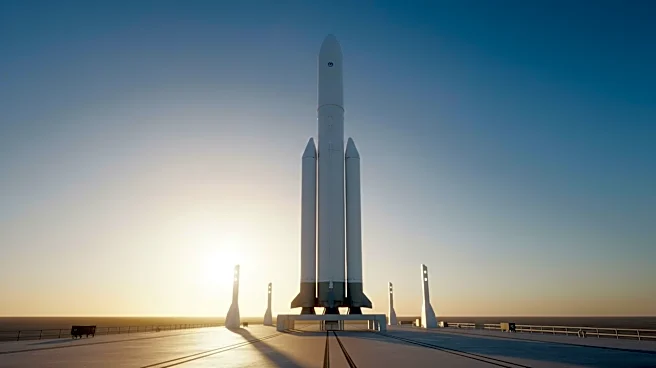
by reforms that opened the sector to private investment, inspired by the success of SpaceX. Chinese companies are now developing reusable rockets, satellite constellations, and space-tourism ventures. Notable achievements include LandSpace's successful launch of a methane-powered rocket and i-Space's orbital rocket launch. The industry is also seeing involvement from major corporations like Geely, which is developing a satellite constellation to support autonomous vehicles. Despite the growth, Chinese companies remain closely tied to government support, which can limit their operational flexibility.
Why It's Important?
The expansion of China's private space industry is reshaping the global space economy. With significant investments and innovations, Chinese companies are becoming formidable competitors to established players like SpaceX. This development could lead to increased competition in the global launch market, potentially driving down costs and accelerating technological advancements. The involvement of private companies also reflects a broader trend of economic modernization in China, where private enterprises are increasingly contributing to strategic industries. However, the reliance on government support poses challenges, as it may restrict the entrepreneurial freedom necessary for groundbreaking innovations. The growth of China's space sector could have implications for international space policy and cooperation, as well as for the strategic balance in space exploration.
What's Next?
As China's private space industry continues to grow, it is likely to attract more international attention and investment. The success of companies like LandSpace and i-Space may encourage further private sector involvement and innovation. However, the industry's future will depend on its ability to balance government support with the need for entrepreneurial independence. The global space community will be watching closely to see how Chinese companies navigate these challenges and whether they can sustain their growth and innovation. Additionally, the U.S. and other countries may need to reassess their strategies to remain competitive in the evolving space economy.