






What's Happening?
U.S. Representative Nick LaLota (R-Amityville) has threatened to withhold federal funding from municipalities that implement measures to monitor U.S. Immigrations & Customs Enforcement (ICE) activities. This stance was highlighted in June when Southold
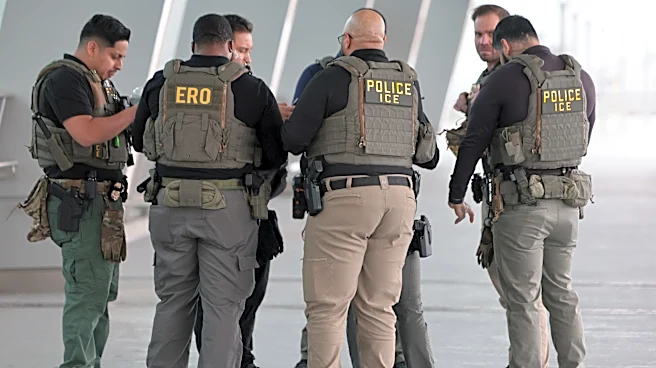
Town Attorney Ben Johnson cautioned against enacting an official law for local ICE monitoring, citing potential financial repercussions due to LaLota's position. Southold Town recently approved a detailed response plan that dispatches police officers to the scene of reported ICE activity to verify operations and de-escalate confrontations. This plan, developed by Southold Police Chief Steven Grattan, aims to mitigate fear and chaos within the community, particularly after previous ICE arrests caused significant disruption. The policy emphasizes peacekeeping, with officers remaining at the scene with body cameras, neither obstructing nor assisting operations unless a judicial warrant is present. Information gathered would be relayed to town officials and potentially impacted institutions like schools and hospitals for situational awareness.
Why It's Important?
Representative LaLota's threat to withhold funding underscores a significant tension between federal immigration enforcement and local community protection efforts. This action could have substantial financial implications for municipalities, potentially forcing them to choose between federal funding and policies designed to address local concerns regarding ICE operations. For communities like Southold, which have experienced fear and disruption from ICE activities, these local monitoring plans are seen as crucial for public safety, fostering trust with law enforcement, and increasing transparency. The debate highlights differing approaches to immigration enforcement, with some localities seeking to de-escalate potential confrontations and ensure due process, while federal officials like LaLota emphasize adherence to federal mandates. The outcome of such funding disputes could set precedents for how local governments interact with federal agencies on sensitive issues, impacting resource allocation and community-federal relations nationwide.
What's Next?
Southold Town has adopted a detailed response plan for ICE activities, which includes dispatching police officers to verify operations and de-escalate confrontations. This plan is a localized approach, distancing itself from a broader proposal that explicitly banned local police cooperation with ICE, as adopted by East Hampton. The town's decision to pursue a 'safe way for Southold' suggests a cautious approach to avoid the financial penalties threatened by Representative LaLota. Future developments will likely involve monitoring the implementation of Southold's plan and observing whether Representative LaLota acts on his threat to withhold funding. Other municipalities considering similar local monitoring measures will likely watch Southold's experience closely to assess the potential risks and benefits. The ongoing dialogue between local and federal authorities regarding immigration enforcement policies is expected to continue, potentially leading to further legislative or policy actions at both levels.
Beyond the Headlines
The conflict between Representative LaLota's stance and Southold's local ICE monitoring plan reveals deeper ethical and legal questions surrounding federalism and local autonomy in the context of immigration. The policy adopted by Southold aims to protect its residents and maintain community trust, particularly among immigrant populations, by ensuring transparency and de-escalation during federal operations. This raises questions about the extent to which local governments can, or should, intercede in federal law enforcement activities, especially when those activities are perceived to cause community distress. The threat of withholding funding can be seen as a coercive measure, potentially undermining local democratic processes and the ability of communities to address their unique needs. This situation could contribute to a broader national conversation about the balance of power between federal and local authorities, the rights of immigrant communities, and the role of local police in federal immigration matters, potentially influencing future legal challenges and policy reforms.