



What's Happening?
Eastern Nebraska experienced historic rainfall overnight, leading to widespread flash flooding and record-breaking precipitation levels. Lincoln set an all-time record for rainfall in a single day, with 6.15 inches officially recorded at the Lincoln Airport.
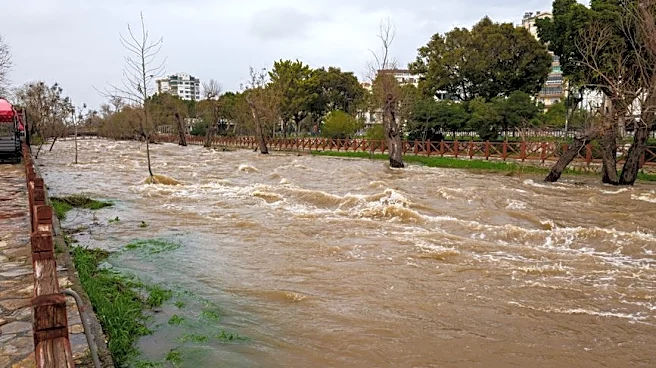
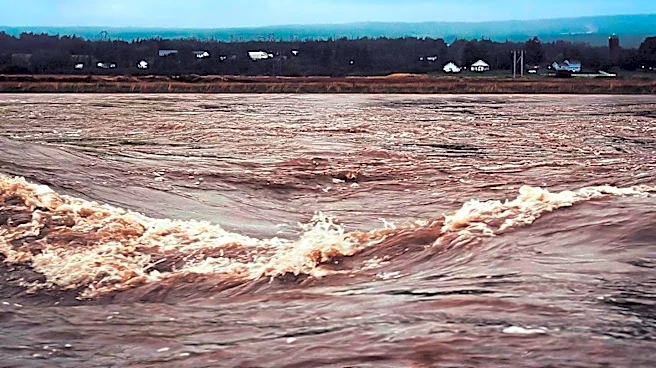
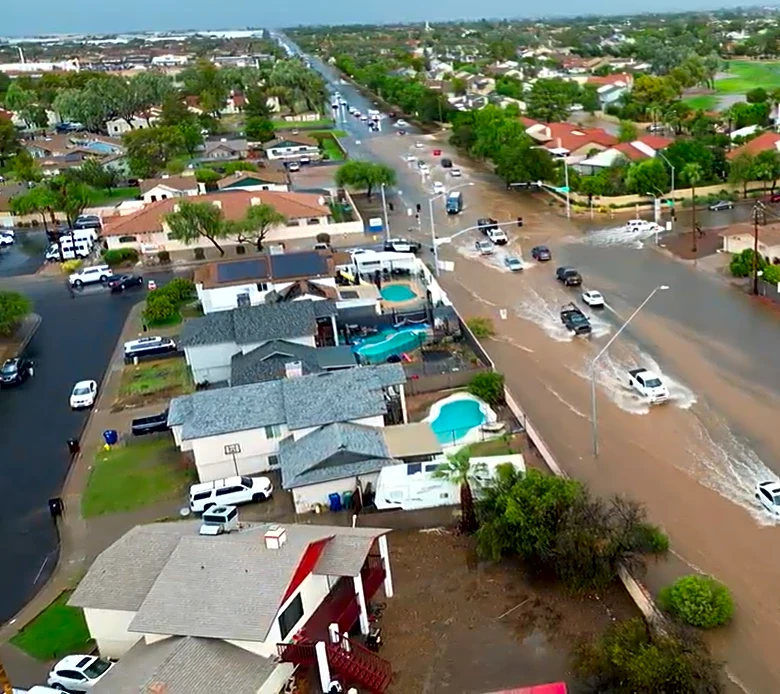
Some areas in northern Lancaster County reported over 10 inches of rain, while Douglas and Saunders counties saw more than 8 inches, and Sarpy and Washington counties received over 7 inches. This intense rainfall resulted in numerous reports of flash flooding, with people stranded and cars swept away in Lincoln and Omaha. Many streets and roads, including U.S. 77 near Ceresco, were closed due to flooding. Over a dozen counties were placed under a flood warning, which was scheduled to remain in effect until Thursday afternoon. Several creeks, including Salt Creek and Little Salt Creek, reached or approached record levels, with Little Salt Creek in Lincoln hitting a new record. The flooding also impacted busing for Omaha Public Schools students, causing delays and route cancellations.
Why It's Important?
The historic rainfall and subsequent flooding in eastern Nebraska have significant immediate and potential long-term impacts. The widespread road closures and transportation disruptions affect daily life, commerce, and emergency services, hindering access and mobility. The damage to infrastructure, including roads and bridges, will require substantial resources for repair and reconstruction. For residents, the risk of property damage from floodwaters is high, leading to financial burdens and potential displacement. The disruption to school busing highlights the broader societal impact, affecting education and family routines. Agriculturally, the region, known for its farming, could face crop damage and soil erosion, impacting local economies. The event also places a considerable strain on emergency responders, who are tasked with rescues and managing the flood crisis. This incident underscores the vulnerability of urban and rural areas to extreme weather events and the critical need for effective flood control measures and emergency preparedness.
What's Next?
As flood warnings remain in effect for several counties, authorities will continue to monitor water levels and assess the extent of the damage. Emergency services will focus on ongoing rescue operations and providing assistance to affected residents. Road closures will persist in many areas until floodwaters recede and safety can be ensured. Omaha Public Schools and other affected institutions will work to restore normal operations, addressing transportation challenges and potential facility damage. In the coming days, communities will begin the process of cleanup and damage assessment, which will likely lead to requests for state and federal aid for recovery efforts. The event may also prompt a review of existing flood mitigation infrastructure and emergency response protocols to better prepare for future extreme rainfall events. Residents are advised to remain vigilant and follow official guidance as conditions evolve.
Beyond the Headlines
This historic flooding event in eastern Nebraska raises broader questions about climate resilience and urban development in regions not traditionally associated with such extreme rainfall. The record-breaking precipitation levels suggest a potential shift in weather patterns, challenging existing infrastructure designed for historical averages. The incident highlights the need for updated stormwater management systems and land-use planning that accounts for increased flood risks. Environmentally, the extensive runoff can lead to water quality issues in local rivers and streams, impacting aquatic ecosystems. Socially, the disruption to daily life, including school and work, can have lasting psychological and economic effects on affected communities. The event also underscores the importance of community preparedness and mutual aid networks in responding to large-scale disasters. It serves as a stark reminder that climate impacts are not confined to coastal areas but can manifest with severe consequences in inland regions, necessitating a comprehensive national approach to climate adaptation.