



What's Happening?
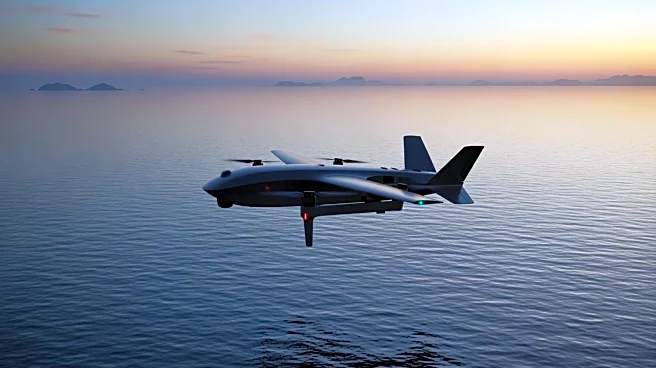
A large Chinese military drone has been conducting regular flights over the South China Sea, transmitting false transponder signals to appear as other aircraft, including a Belarusian cargo plane and a British Typhoon fighter jet. These operations, scrutinized
by military attaches and security analysts, represent a significant shift in China's grey-zone tactics in the contested region. The flights, logged under the call sign YILO4200, often head east from Hainan towards the Philippines and down Vietnam's coast. Analysts suggest these activities are testing decoy capabilities in the event of a Chinese invasion of Taiwan. The operations involve exploiting electronic warfare and deception tactics, potentially sowing confusion in a conflict and concealing sensitive surveillance activities.
Why It's Important?
The drone operations highlight China's expanding military presence in the South China Sea and around Taiwan, responding to Communist Party demands to enhance military readiness. The use of deception tactics could complicate the strategic calculations of the U.S. and its allies, as milliseconds count in highly automated conventional conflicts. The flights' paths suggest a rehearsal for operations over Taiwan, raising concerns about potential military confrontations. The activities could also serve as a propaganda tool, misleading adversaries and the international community about China's military capabilities and intentions.
What's Next?
The continuation of these drone flights could lead to increased tensions in the region, prompting responses from the U.S. and its allies. The Pentagon and other international military bodies may need to enhance their surveillance and countermeasures to address the potential threat posed by these operations. Diplomatic efforts might intensify to address the security concerns raised by China's actions, potentially leading to discussions at international forums about the implications of such military tactics.
Beyond the Headlines
The use of false transponder signals by Chinese drones raises ethical and legal questions about the manipulation of international aviation protocols. This tactic could set a precedent for other nations to adopt similar strategies, complicating global air traffic management and increasing the risk of accidental confrontations. The operations also reflect broader geopolitical shifts, as China seeks to assert its influence in the South China Sea and challenge the existing security architecture in the Asia-Pacific region.