




What's Happening?
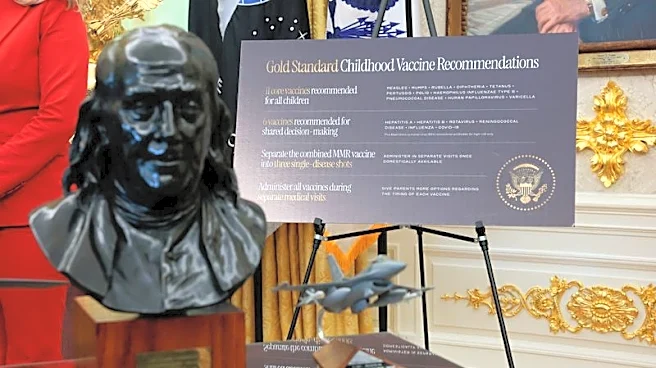
President Donald Trump recently signed an executive order addressing the childhood vaccine schedule, specifically recommending that the measles, mumps, and rubella (MMR) vaccine be administered as three separate shots rather than a single combined dose.
This executive action, which was announced on August 16, 2026, is widely anticipated to face significant legal challenges and is not expected to result in an immediate, widespread impact on vaccine accessibility for parents across the nation. Dr. Elizabeth Murray, a representative from the American Academy of Pediatrics, engaged in public discussions to help navigate the potential confusion and implications arising from this executive order, emphasizing the medical community's perspective on established vaccination protocols. In a parallel development, New York City is currently dealing with a notable legal setback concerning its proposed pied-à-terre tax. A judge on Staten Island issued a temporary restraining order, which effectively halted the enforcement of this new tax. This judicial intervention was prompted by a lawsuit filed by a coalition of homeowners who are challenging the legality and implementation of the tax. However, the city government quickly moved to appeal this ruling by filing court papers. This appeal serves to block the judge's temporary order from taking immediate effect, ensuring that the tax's fate remains in limbo until the appellate process concludes. Randy Mastro, the attorney representing the homeowners in their efforts to stop the tax, has been a vocal participant in the ongoing public discourse surrounding the lawsuit. Both of these concurrent events highlight a period of considerable policy and legal contention within the United States, affecting both national health guidelines and local fiscal policies.
Why It's Important?
President Trump's executive order on the childhood vaccine schedule carries substantial importance for public health policy, parental decision-making, and the pharmaceutical industry. By recommending the separation of the MMR vaccine into three distinct shots, the order challenges established medical protocols and could introduce complexities into routine immunization practices. The anticipated legal challenges highlight a potential clash between executive authority and the scientific consensus upheld by medical organizations like the American Academy of Pediatrics. This could influence public trust in vaccine guidelines and potentially impact vaccine development and distribution strategies for pharmaceutical companies. The debate surrounding vaccine mandates and schedules is a recurring theme in U.S. public discourse, making any executive intervention a focal point for various advocacy groups and healthcare stakeholders. The temporary halt of New York City's pied-à-terre tax is equally significant, particularly for urban economics and real estate. This tax, aimed at generating revenue from non-primary residences, represents a critical fiscal policy for the city. Its legal challenge and subsequent pause underscore the contentious nature of wealth-based taxation and property rights. For New York City, the tax was a potential source of billions in revenue, and its delay creates budgetary uncertainty. For homeowners, especially those with secondary residences, the outcome will determine future financial obligations and could influence investment decisions in the city's real estate market. The legal battle could also set a precedent for other major U.S. cities considering similar taxation measures to address housing affordability or budget deficits.
What's Next?
Regarding President Trump's executive order on the childhood vaccine schedule, the immediate future will likely involve a series of legal challenges. Given the order's nature and the established medical consensus on vaccine administration, various public health organizations and legal entities are expected to contest its implementation. This will likely result in prolonged court battles, meaning that any significant, widespread change to vaccine access or parental choices based on this order is improbable in the short term. The American Academy of Pediatrics and similar bodies will continue to provide guidance based on current scientific evidence, potentially creating a dual narrative for parents navigating vaccine decisions. The executive order may also prompt further legislative discussions at both federal and state levels regarding vaccine policy and the scope of executive power in public health matters. For New York City's pied-à-terre tax, the next step is the city's appeal of the temporary restraining order. This appeal process will determine whether the tax can proceed as planned or if it will face further delays or even be permanently blocked. Until a resolution is reached in the appellate courts, the enforcement of the tax will remain paused, creating continued uncertainty for both city revenue projections and affected property owners. Major stakeholders, including real estate developers, homeowner associations, and city fiscal planners, will closely monitor the legal proceedings. The outcome of this appeal could significantly impact New York City's financial planning and its ability to implement new taxation policies, potentially influencing similar legislative efforts in other high-cost urban centers across the United States.
Beyond the Headlines
President Trump's executive order on vaccine scheduling delves into deeper societal and ethical considerations beyond its immediate policy implications. It reignites the long-standing debate about individual autonomy versus collective public health, particularly concerning childhood vaccinations. The recommendation to split the MMR vaccine, contrary to current medical practice, could inadvertently fuel vaccine hesitancy or misinformation, potentially impacting herd immunity and the resurgence of preventable diseases. This development highlights the increasing politicization of public health issues and the challenge of maintaining scientific integrity in policy-making. It also raises questions about the role of executive power in areas traditionally guided by scientific and medical consensus, potentially setting a precedent for future interventions in public health. The legal battle over New York City's pied-à-terre tax reflects broader economic and social shifts in urban environments. This tax targets a specific segment of property owners, often those with significant wealth, and is part of a larger trend where cities seek to address income inequality and fund public services through progressive taxation. The resistance to this tax, as evidenced by the homeowners' lawsuit, underscores the tension between property rights and the perceived need for wealth redistribution or increased public funding. The outcome could influence the social contract between affluent residents and the broader urban community, potentially shaping future debates on housing affordability, gentrification, and the equitable distribution of economic burdens and benefits in major U.S. cities. It also touches upon the legal limits of local government's taxing authority.