






What's Happening?
Students across France have initiated blockades at numerous high schools to pressure the government regarding education reforms and inadequate school resources. Following a two-week autumn break, protests resumed with students demanding renovations for dilapidated
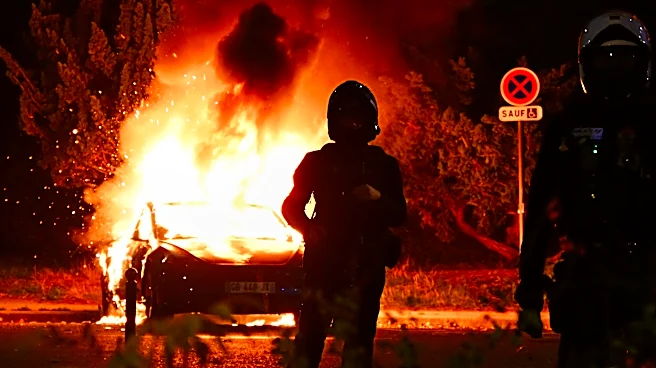
schools, reduced class sizes, and an increase in university places. Authorities reported 48 out of France's 3,700 high schools were blocked, including in major cities like Paris, Rennes, Toulouse, and Lyon. However, the Union syndicale lycéenne (USL) claimed a significantly higher figure of 500 establishments were blocked. The student union also criticized what it described as heavy-handed tactics by authorities, including the deployment of riot police units outside schools. These student actions are occurring ahead of a nationwide strike planned by trade unions later this week, indicating a broader movement against soaring prices and insufficient public services.
Why It's Important?
The student protests in France highlight growing discontent with public services and government policies, which could have significant implications for social stability and political discourse. The demands for better school infrastructure and increased university places reflect concerns about the quality and accessibility of education, which are fundamental to national development and economic competitiveness. The reported use of riot police against student protesters could escalate tensions and draw international scrutiny regarding civil liberties and protest rights. Furthermore, the student movement has inspired similar actions in other European countries, including Belgium, Italy, and Spain, suggesting a potential for broader regional unrest and a shared dissatisfaction with educational and economic conditions across Europe. The ongoing protests, coupled with a nationwide strike, could disrupt daily life and economic activities, placing additional pressure on the French government to address these grievances.
What's Next?
Students are planning another day of blockades on Thursday, coinciding with a nationwide strike called by trade unions. This coordinated action is expected to intensify pressure on the French government. The government previously unveiled measures aimed at addressing some student demands, particularly reforms to the university admissions process. However, student leaders have deemed these proposals insufficient, indicating that further concessions or more comprehensive reforms may be necessary to quell the unrest. The response from authorities to the upcoming protests, particularly regarding law enforcement tactics, will be closely watched. The outcome of these protests and strikes could influence future government policy decisions on education, public spending, and social welfare, potentially leading to either a resolution of grievances or further escalation of civil disobedience.
Beyond the Headlines
The student protests in France underscore a deeper societal struggle over resource allocation and the future of public services. The criticism of 'heavy-handed tactics' by authorities raises questions about the state's approach to dissent and the balance between maintaining order and protecting the right to protest. The inspiration drawn by students in other European countries suggests a transnational dimension to these grievances, potentially fueled by shared economic pressures and concerns about educational opportunities. This movement could signify a generational shift in political engagement, with young people increasingly mobilizing to demand systemic changes. The long-term implications could include a re-evaluation of educational funding models, a push for greater transparency in university admissions, and a broader debate on the role of government in providing essential public services amidst economic challenges.