

What's Happening?
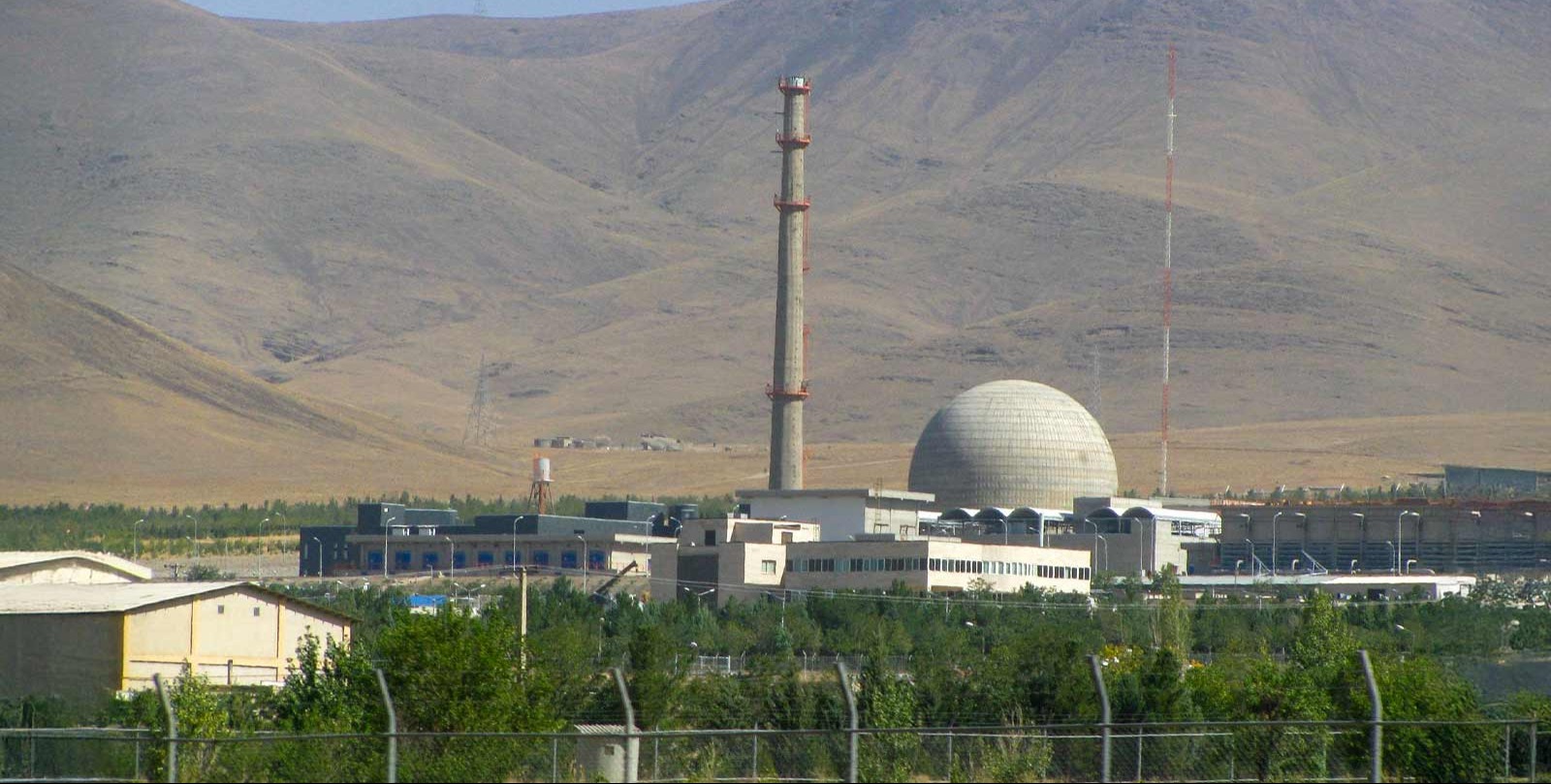
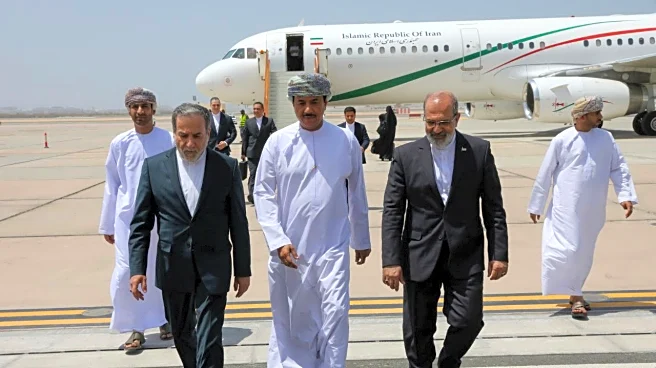
The United States and Iran have concluded two rounds of indirect talks in Muscat, Oman, focusing on Iran's nuclear program. President Trump has reiterated that Iran will not be allowed to develop nuclear weapons, despite Iran's insistence on its right
to enrich uranium. The talks, facilitated by Omani officials, are seen as a 'good start' by Iran's Foreign Minister Abbas Araghchi. However, the U.S. Treasury has imposed new sanctions on Iranian entities involved in illegal oil trading, complicating the diplomatic efforts.
Why It's Important?
These talks are crucial in addressing the escalating tensions between the U.S. and Iran, with potential implications for regional stability and global security. The outcome could influence U.S. foreign policy and its approach to Iran's nuclear ambitions. The sanctions and military threats underscore the challenges in reaching a diplomatic resolution, highlighting the delicate balance between negotiation and coercion.
What's Next?
Further talks are expected, with both sides needing to navigate complex issues such as uranium enrichment and economic sanctions. The U.S. may continue to apply pressure through sanctions and military presence, while Iran seeks to maintain its nuclear rights. The international community will be closely watching these developments, as they could impact global energy markets and regional alliances.