




What's Happening?
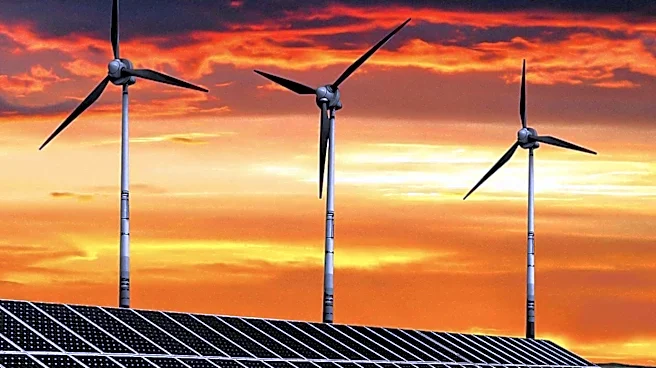
India has announced an ambitious goal to increase its clean energy capacity to 900 gigawatts by 2035, a significant jump from its current target of 500 gigawatts by 2030. This new target encompasses non-fossil power sources such as solar, wind, hydropower,
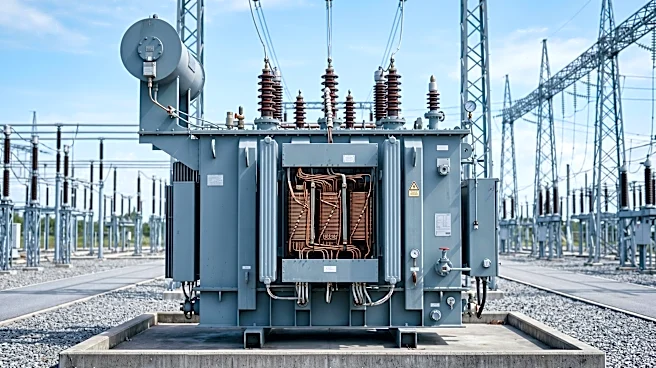
and nuclear energy. The country has also approved nearly $20 billion in funding for power grid upgrades and battery storage under its Green Energy Corridor plan to address existing bottlenecks. Despite being among the fastest nations to expand clean power, India faces substantial challenges, particularly with its transmission infrastructure. Over the past 16 months, the grid's inability to accommodate renewable energy led to the curtailment of solar generation sufficient to power approximately 10 million homes. Experts, including Nikit Abhyankar from the India Energy and Climate Center at the University of California, Berkeley, emphasize that a robust and innovative transmission grid is crucial for India to meet its clean energy objectives.
Why It's Important?
India's aggressive push towards clean energy has significant global implications, especially as it is the world's most populous country and a major carbon emitter. Success in this endeavor could serve as a model for other developing nations, demonstrating an economically affordable path to energy transition. The expansion of clean energy could also lead to lower electricity costs within India, curb the construction of new coal plants, and accelerate the overall shift away from fossil fuels. Economist Ajay Shah of the Mumbai-based XKDR Forum suggests this transition could lead to the emergence of an Indian 'electrostate,' where domestically produced electricity increasingly replaces imported fossil fuels. However, the continued reliance on coal, which generated about 71% of India's electricity in 2025, poses a major hurdle. The operational challenges of existing coal plants, which struggle to reduce output quickly when renewable energy is available, further complicate grid integration and the clean energy transition.
What's Next?
To achieve its 2035 clean energy target, India must rapidly enhance its transmission infrastructure and energy storage capabilities. The Green Energy Corridor plan aims to accommodate up to 135 gigawatts of renewable energy by 2033 through new transmission lines and battery storage, but analysts question if this will be sufficient, with Berkeley researchers estimating a need for 250 gigawatts of storage over the next decade. India also needs to address policy issues that discourage renewable energy investment, such as requirements for businesses to subsidize other consumers and restrictions on direct sales between private generators and buyers. Allowing electricity prices to fluctuate based on supply and demand and facilitating foreign investment are critical steps. Furthermore, expanding domestic battery manufacturing is essential to reduce dependence on imports and capture more economic benefits from the transition. The ongoing United Nations climate talks, COP31, will likely see India's progress and challenges in clean energy as a key discussion point.
Beyond the Headlines
The challenges India faces in integrating its rapidly expanding clean energy capacity highlight a broader global issue: the need for grid modernization to keep pace with renewable energy deployment. While India's clean energy growth has surpassed that of the United States, its experience underscores that simply generating more clean power is not enough; the infrastructure to deliver and manage it efficiently is equally vital. The potential for newly built coal plants to become 'stranded assets' if renewable targets are met raises economic and environmental concerns, emphasizing the importance of strategic energy planning. India's efforts to balance energy security, economic growth, and climate goals will offer valuable lessons for other nations navigating similar transitions. The shift towards an 'electrostate' could fundamentally alter India's economic landscape, making cheap energy a new competitive advantage alongside cheap labor, potentially reshaping global manufacturing and trade dynamics.