


What's Happening?
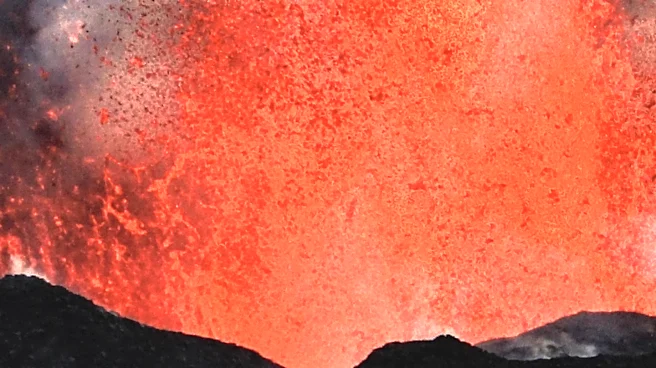
The Kīlauea volcano's summit eruption within Halemaʻumaʻu crater is currently paused after its 56th fountaining episode concluded on November 5, 2026. The summit has been undergoing steady reinflation since the episode ended, though this process slowed
slightly over the past day. Despite the pause in fountaining, seismic tremor remains elevated, and moderate to strong glow is visible from the southwest vent, with moderate glow from the north vent. USGS Hawaiian Volcano Observatory scientists observed a roiling lava surface approximately 130-165 feet deep in both vents during a helicopter overflight on November 10. The Uēkahuna tiltmeter (UWD) has recorded about 11 microradians of inflationary tilt since the end of episode 56. The average sulfur dioxide (SO2) emission rate recorded on November 12 was approximately 3,000 tonnes per day, with trade winds carrying volcanic gases southwest. The eruption has been occurring episodically since December 23, 2024, with fountaining episodes typically lasting less than 12 hours and separated by pauses of two or more weeks.
Why It's Important?
The ongoing episodic eruption of Kīlauea, a prominent U.S. volcano, carries significant implications for public safety and environmental management in Hawaiʻi. While current eruptive activity is confined to a closed area of Hawaiʻi Volcanoes National Park, the potential for intrusions to shift the location of activity poses a risk of earthquakes, ground cracks, and landslides outside the immediate crater. The continuous release of volcanic gases, primarily sulfur dioxide, contributes to vog (volcanic air pollution) downwind, which can cause respiratory and other health problems for residents and visitors. Tephra fallout, consisting of small glassy volcanic fragments, also presents health hazards, causing skin, eye, and respiratory irritation. Although lava flows within Halemaʻumaʻu are currently contained, any intrusive activity could lead to lava flows outside the crater, threatening infrastructure and natural landscapes. The U.S. Geological Survey (USGS) and local authorities remain vigilant, highlighting the need for ongoing monitoring and public awareness to mitigate potential hazards.
What's Next?
Another fountaining episode at Kīlauea's summit is considered likely, with the current forecast window for episode 57 fountaining set for November 17-22. This prediction is based on the ongoing inflationary trend observed by tiltmeters and the continued glow within the eruptive vents. The USGS Hawaiian Volcano Observatory (HVO) will continue its close monitoring of Kīlauea, maintaining communication with Hawaiʻi Volcanoes National Park and the Hawaiʻi County Civil Defense Agency to address eruptive hazards. The primary hazards to watch for include volcanic gas emissions, tephra fallout, and the potential for lava flows, especially if intrusive activity occurs outside the Halemaʻumaʻu crater. The extremely hazardous nature of Kīlauea's caldera rim, which has been closed to the public since 2008, underscores the importance of adhering to safety guidelines and official advisories as the volcano's activity evolves.
Beyond the Headlines
The persistent activity at Kīlauea highlights the dynamic geological processes shaping the Hawaiian Islands and the continuous challenge of coexisting with an active volcano. Beyond the immediate physical hazards, the long-term environmental impact of vog and tephra on the ecosystem and human health is a critical concern. The scientific data collected during these episodic eruptions provides invaluable insights into volcanic behavior, aiding in the development of more accurate forecasting models and hazard mitigation strategies. The closure of the caldera rim since 2008 reflects a proactive approach to public safety, emphasizing the need for respect for natural forces. This ongoing volcanic activity also serves as a natural laboratory for researchers, contributing to a deeper understanding of Earth's interior and the mechanisms driving volcanic eruptions, which has broader implications for volcanic hazard assessment globally.