

What's Happening?
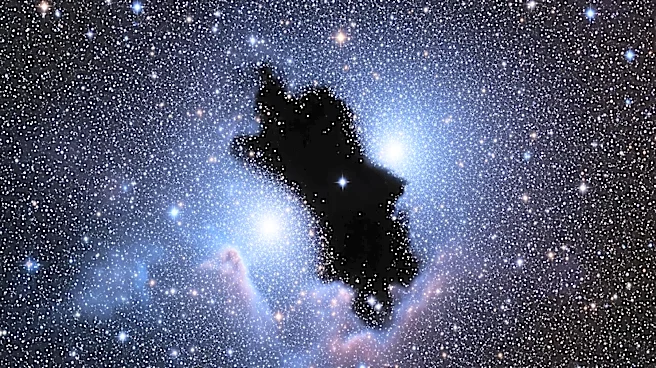
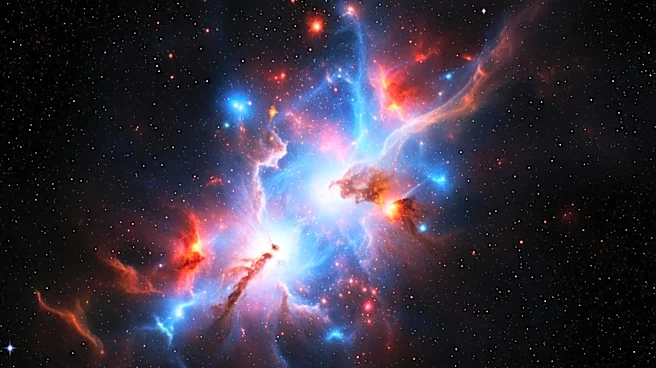
The Hubble Space Telescope has revisited the Trifid Nebula, a stellar nursery located approximately 5,000 light years away, to celebrate its 36th anniversary. The new images reveal subtle changes in the nebula's cloud of gas and dust since Hubble's first
observation in 1997. Notably, there is an expansion of a jet of plasma ejected by a forming star, demonstrating the dynamic nature of astronomical objects over relatively short time spans. This revisit highlights the ongoing evolution of the nebula and provides a unique opportunity to study the processes involved in star formation.
Why It's Important?
The ability to observe changes in the Trifid Nebula over decades offers astronomers valuable data on the lifecycle of stars and the environments in which they form. These observations contribute to a deeper understanding of the mechanisms driving stellar evolution and the formation of planetary systems. The Hubble Space Telescope's long-term monitoring capabilities are crucial for capturing these changes, allowing scientists to piece together the complex history of cosmic structures and their development over time.