





What's Happening?
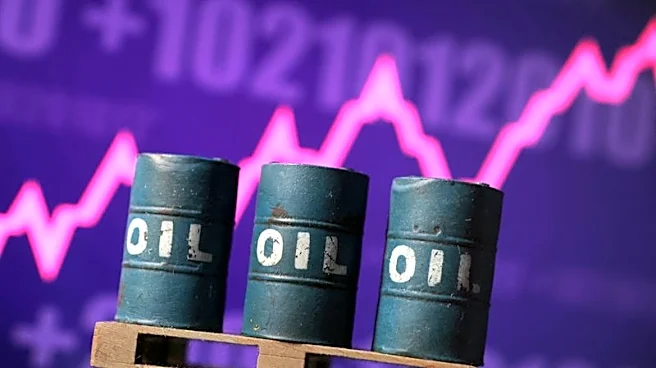
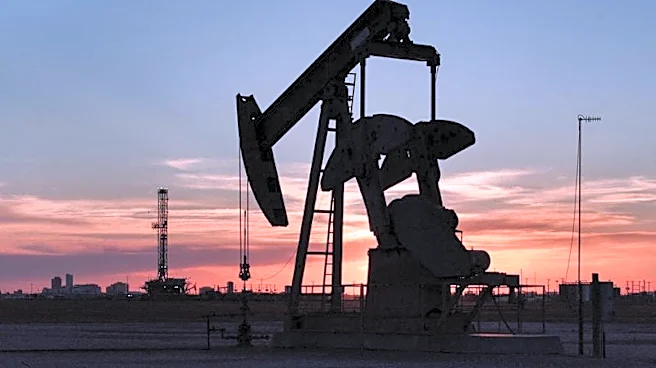
Oil prices have risen significantly due to stalled peace talks between the United States and Iran, which have left the Strait of Hormuz nearly impassable. This disruption has caused a significant supply shock in global markets. West Texas Intermediate
futures increased by 2.1%, settling above $96 a barrel, while Brent crude closed near $108. The White House, under President Trump, has been involved in discussions with Iran, but no resolution appears imminent. The ongoing conflict has led to a blockade of the Strait of Hormuz, severely affecting the transit of crude oil, natural gas, and fertilizers. This has raised concerns about a potential inflation crisis as the supply of these essential commodities remains constrained.
Why It's Important?
The closure of the Strait of Hormuz, a critical chokepoint for global oil transportation, has significant implications for the global economy. The disruption in oil supply is likely to lead to increased energy prices, which can contribute to inflationary pressures worldwide. This situation affects not only the energy sector but also industries reliant on oil and gas, such as transportation and manufacturing. The prolonged conflict and supply constraints could lead to economic instability, particularly in countries heavily dependent on oil imports. Additionally, the geopolitical tensions between the US and Iran could further complicate international relations and trade dynamics.
What's Next?
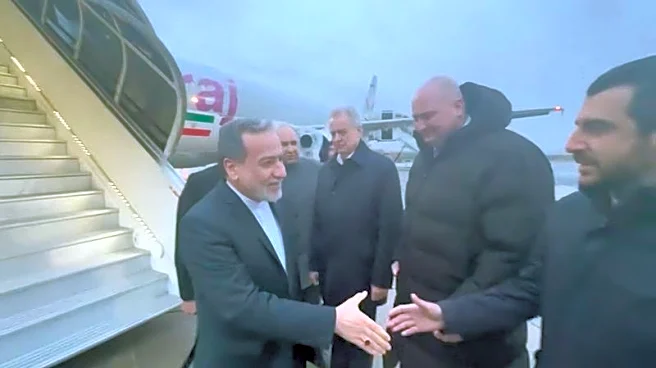
The ongoing negotiations between the US and Iran are crucial for resolving the current supply disruption. However, with both sides maintaining firm stances, a resolution seems unlikely in the near term. The US is focused on Iran relinquishing its nuclear capabilities, while Iran demands negotiations free from threats or blockades. The international community, including major oil-importing nations, will be closely monitoring the situation, as prolonged disruptions could necessitate strategic adjustments in energy sourcing and consumption. The potential for further escalation in the region remains a concern, which could lead to additional market volatility.